Why Food Waste Treatment Systems Are Important
A food waste treatment system helps convert everyday organic waste into something useful, enabling businesses and communities to reduce emissions, lower costs and move toward more circular, sustainable living practices.
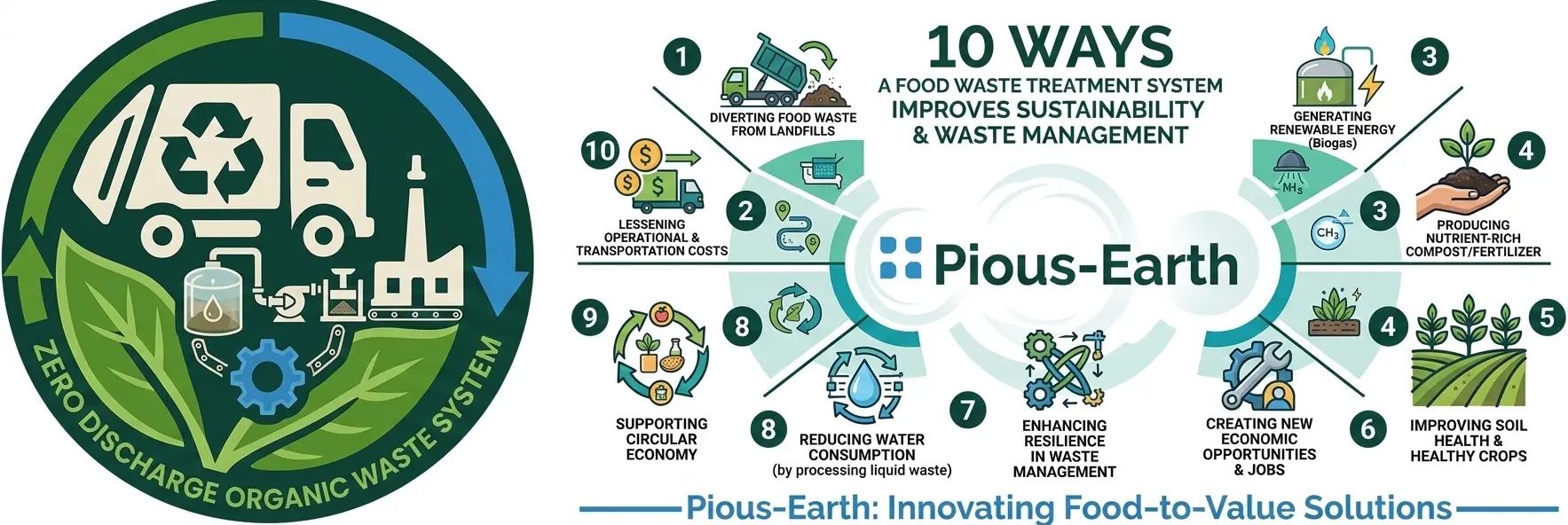
10 Ways a Food Waste Treatment System
1. Reduces Food Waste Sent to Landfills
Reducing food waste sent to landfills means minimizing discarded food through better planning and sustainable waste management. Below are some key points explaining how it helps.
-
Diverts organic waste from dumps, aligning with solutions to food waste globally and reducing reliance on expensive landfill disposal.
-
Prevents methane emissions generated when Food Waste Affects the Environment through uncontrolled decomposition in landfill sites.
-
Supports 10 ways to avoid wastage of food in restaurants, hotels and canteens by processing leftovers on-site instead of sending them to mixed waste streams.
2. Lowers Waste Disposal Costs
-
On-site treatment cuts transport, gate fees and landfill taxes that are rising as policies tighten, revealing the true cost of waste.
-
Businesses using Industrial Food Waste Management Systems and Commercial Food Waste Composting can stabilize costs and avoid penalties for non-compliance.
-
This represents one of the 10 smart ways a food waste treatment system cuts costs, mainly by reducing total waste volume and lowering the number of off-site collection trips required.
Estimated Cost Impact of a Food Waste Treatment System
|
Cost Factor |
Without System |
With On-Site System |
Long-Term Impact |
|
Waste Transport |
Frequent pickups |
Reduced trips |
30–50% savings |
|
Landfill Fees |
Recurring payments |
Minimal or none |
Lower recurring cost |
|
Storage Space |
Large bin area |
Reduced bin usage |
Space optimization |
|
Compliance Risk |
Penalty risk |
Regulation-ready |
Avoid legal fines |
|
Energy Value |
No recovery |
Compost/Biogas output |
Additional ROI |
3. Minimizes Carbon Footprint
-
Treating food waste locally through Decentralized Waste Management Systems reduces truck movements and fuel use, lowering overall emissions.
-
Anaerobic and aerobic technologies capture or avoid methane, minimizing how Food Waste Affect the Environment through greenhouse gas release.
-
These food waste technology solutions help organizations meet climate targets, Green Building Certification Waste Management criteria and ESG goals.
4. Converts Food Waste into Useful Compost
-
An In vessel composting system transforms peelings, plate scrapings and kitchen prep waste into nutrient-rich compost within weeks instead of months.
-
This compost supports urban gardens, landscaping and creative ways to reduce food waste by closing the loop between food production and disposal.
-
A Composting Machine for Housing Societies enables residents to practice 5 ways to reduce food waste at home while generating soil conditioner for shared green spaces.
5. Generates Renewable Energy from Organic Waste
-
Anaerobic digestion systems within Industrial Food Waste Management Systems can turn waste into biogas that replaces fossil fuel energy.
-
Biogas and digestate support practical ways to use a food waste treatment system, generating power, heat or upgraded gas for local use.
-
This shows how 10 effective ways a food waste treatment system reduces waste also align with national renewable energy and Waste Management Solutions strategies.
6. Improves Hygiene and Controls Odor
-
Enclosed units and in-vessel designs minimize odor, pests and leachate, keeping kitchens, canteens and back-of-house areas clean and safe.
-
A PLC Controlled Food Waste Converter automates processing, reducing human contact, spills and potential contamination risks around bins.
-
Hospitals can use Hospital Waste Composting Equipment for food scraps, improving hygiene in sensitive environments while complying with strict health standards.
7. Reduces Waste Volume and Saves Space
-
Processing units can cut waste volume by 60–90 percent, freeing storage space and simplifying logistics for busy food service operations.
-
This is one of the top ways to use a food waste treatment system when space is tight in city hotels, cloud kitchens and institutional canteens.
-
Canteen Waste Management for Factories becomes easier as bulk wet waste is reduced at source, lowering the number of bins and collection points needed.
8. Supports Sustainable Living and Green Practices
-
Food waste treatment benefits households, schools and businesses that want practical solutions to reduce food waste and live more responsibly.
-
Systems designed by innovators like Pious Earth show how localized treatment and In vessel composting system technology can support community-led sustainability.
-
Decentralized Waste Management Systems empower neighborhoods to turn waste into compost and energy, making sustainability visible and achievable every day.
9. Ensures Compliance with Waste Management Regulations
-
Rising landfill taxes and bans on untreated biodegradable waste push organizations to adopt compliant, on-site Waste Management Solutions.
-
Green Building Certification Waste Management standards increasingly reward sites that demonstrate on-site segregation, treatment and recovery of organic waste.
-
Businesses that invest in food waste solution business models reduce exposure to future regulation shifts and strengthen long-term operational resilience.
10. Enhances Brand Image and Environmental Responsibility
-
When companies actively demonstrate 10 Ways a Food Waste Treatment System improves sustainability, it helps build stronger trust with customers, employees and communities that value responsible environmental action.
-
Hotels, restaurants and institutions that show 10 ways to avoid wastage of food and clear food waste problems and solutions differentiate themselves in a crowded market.
-
Visible investment in Commercial Food Waste Composting, In vessel composting system units and food waste solution business models reinforces a brand’s environmental leadership.
How 10 Ways a Food Waste Treatment System Works in Everyday Life
-
At home, 5 ways to reduce food waste at home and what you can do to avoid food waste include planning meals, storing food correctly and using small treatment units for scraps.
-
In schools, 10 ways to reduce food waste at school and food waste solutions for students focus on awareness, portion control and small-scale systems that turn canteen waste into compost.
-
In restaurants, 10 ways to avoid wastage of food in restaurants include tracking plate returns, rethinking menus and using on-site equipment as one of the best ways to use a food waste treatment system.
Turning Policy Pressure into Opportunity
-
As landfill and incineration costs rise, the true cost of waste encourages operators to explore top ways to reduce food waste treatment through on-site solutions.
-
Decentralized Waste Management Systems and food waste technology solutions convert a cost center into a value stream by creating compost, biogas and reputational benefits.
-
This shift unlocks Franchise Opportunities for service providers who can design, install and maintain 10 ways a food waste treatment system works across multiple sites.
Linking Food Waste Treatment to Global Goals
-
Effective systems deliver solutions to food waste globally by reducing loss across the supply chain, from farms and factories to canteens and homes.
-
International agencies highlight food waste problems and solutions as a key climate lever, because avoiding waste cuts emissions while protecting land and water.
-
Food waste management project ideas now often include In vessel composting system models, small digesters and Decentralized Waste Management Systems for cities and rural areas.
Choosing the Right Food Waste Treatment Benefits for Your Site
-
For apartments, a Composting Machine for Housing Societies combined with 10 ways to avoid wastage of food helps residents live more sustainably and cut common area waste.
-
For factories and institutions, Canteen Waste Management for Factories and Hospital Waste Composting Equipment tackle bulk organic loads safely and efficiently.
-
For larger kitchens, PLC Controlled Food Waste Converter units deliver 10 smart ways a food waste treatment system cuts costs by automating volume reduction and improving hygiene.
Building a Scalable Food Waste Solution Business
-
Operators can turn their expertise into Franchise Opportunities that provide standardized Waste Management Solutions, service support and training for clients.
-
Partners can deploy practical ways to use a food waste treatment system in malls, campuses, hotels and smart cities as Commercial Food Waste Composting demand grows.
-
These models show 10 ways a food waste treatment can help governments and businesses reach circular economy targets and reduce strain on central infrastructure.
Conclusion: Why Investing in a Food Waste Treatment System Is a Smart Choice
Choosing the right food waste treatment system cuts costs, reduces emissions and turns everyday waste into long-term environmental and economic value.
Frequently Asked Questions
Q1. How do food waste treatment systems reduce landfill use?
They separate and process organic waste on-site, so less mixed waste is sent to landfill or incineration facilities.
Q2. Can small sites benefit from these systems?
Yes, compact units suit homes, schools and cafés, making ways to stop food wastage practical even at a small scale.
Q3. Are these systems expensive to run?
While upfront costs exist, long-term savings on transport, tipping fees and penalties often outweigh operating expenses.
Q4. Do these technologies support students and schools?
Schools can adopt food waste solutions for students that turn canteen scraps into compost for gardens and learning projects.
Q5. What are some food waste management project ideas?
Ideas include campus compost hubs, community In vessel composting system units and decentralized biogas plants linked to local kitchens.
