What Is a Campus Scale Organic Waste Composter?
A campus scale organic waste composter is an onsite system that converts daily food scraps and biodegradable waste from hostels, canteens and gardens into nutrient rich compost.
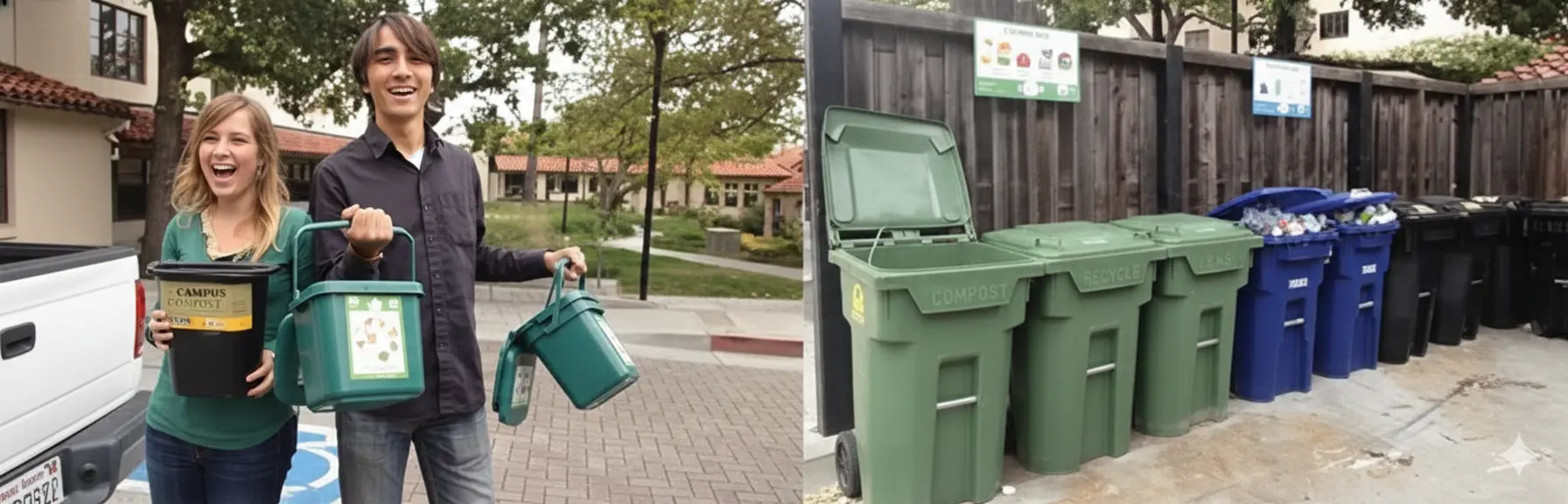
Types of Campus Scale Organic Waste Composting Systems
-
In vessel composting system units for enclosed, fast, hygienic processing.
-
Campus scale in vessel composter with automatic mixing, aeration and heating.
-
Campus scale onsite composting system using organic waste composter machine.
-
Campus scale on campus composting system with aerobic bins and windrows.
-
Campus scale biodegradable waste composting machine with semiautomatic controls.
-
Organic waste converter for apartments or hostels adapted for campus use.
-
Decentralized Waste Management Systems using multiple small composters across campus.
How to Choose the Campus Scale Organic Waste Composter
-
Estimate daily food waste from canteens, hostels, staff housing and mess areas.
-
Match capacity of campus scale organic waste composter to peak waste generation.
-
Decide between campus scale automatic organic waste composter and semiautomatic models based on manpower.
-
Check organic waste converter machine price against budget and expected savings in disposal costs.
-
Prefer in vessel composting system or campus scale food waste composter with odor control and leachate management.
-
Verify compliance with local Solid Waste Management rules and institutional Waste Management Solutions policies.
-
Evaluate aftersales service, AMC support and availability of spare parts.
How to Set Up a Campus Scale Composting System
-
Map all organic waste streams: dining halls, cafeterias, hostel kitchens, staff quarters and garden waste.
-
Decide central hub or decentralized Waste Management Systems based on space and logistics.
-
Select site with water, power, drainage and easy vehicle or trolley access for a campus scale onsite composting system.
-
Install campus scale organic waste composting machine or campus scale in vessel composter with proper foundation.
-
Provide labeled bins for source segregation of food waste, recyclables and landfill waste.
-
Train housekeeping, kitchen staff and students on correct segregation and operation of the organic waste composter machine.
-
Set standard operating procedures for daily loading, monitoring temperature and unloading compost.
-
Plan use of compost in campus landscaping, kitchen gardens and community green spaces.
Challenges in Running a Campus Composting System
|
Challenge |
Impact on Campus |
Practical Solution |
|
Poor waste segregation by students and staff |
Contaminated feedstock, machine damage, low compost quality |
Conduct awareness drives, clear signage, color coded bins and periodic audits |
|
Odor and pest issues near hostels or canteens |
Complaints from students, neighbors and administration |
Use in vessel composting system with aeration, proper C:N ratio and closed design |
|
Irregular loading and machine overloading |
Breakdowns, incomplete composting and higher running cost |
Fix daily loading schedule, assign responsible team and monitor logs |
|
Limited space for a central campus scale food waste composter |
Difficulty obtaining permissions and clearances |
Opt for compact campus scale automatic organic waste composter or decentralised units |
|
Lack of technical expertise and continuity |
Inconsistent operation and long downtime |
Sign AMC with vendor, train staff and create student green clubs |
Core Components of a Campus Scale Organic Waste Composter
-
Feed hopper for loading segregated food waste, garden waste and biodegradable material.
-
Shredder or crusher to reduce particle size for faster decomposition in the organic waste converter for home or campus models.
-
Mixing chamber to blend green waste and bulking agents such as sawdust or cardboard.
-
Aeration system with blowers or agitators to supply oxygen for aerobic microbes.
-
Heating or insulation to maintain optimal composting temperature on campus scale in vessel composter units.
-
Leachate collection and drainage to avoid waterlogging and foul smell.
-
Control panel for timers, motors, temperature and safety features on the organic waste composter machine.
-
Discharge door or screw conveyor to remove semifinished compost for curing.
How a Campus Organic Waste Composter Works
-
Segregated food scraps, plate waste and vegetable peels are collected from dining halls and loaded into the composter.
-
Waste passes through a crusher or shredder for size reduction and even mixing.
-
Bulking agents are added to balance moisture and carbon–nitrogen ratio.
-
In a campus scale organic waste composting machine, paddles or augers mix the material continuously.
-
Blowers supply air to maintain aerobic conditions and control temperature.
-
Microbial activity breaks down organic matter, reducing volume by up to 80–90% in 24–72 hours.
-
Semimature compost is discharged, cured in crates or windrows and then used on campus gardens and lawns.
Key Benefits of Campus Scale Organic Waste Composter
-
Reduces dependence on external waste transport and landfill disposal, supporting Decentralized Waste Management Systems.
-
Cuts greenhouse gas emissions compared to landfilling food waste.
-
Produces high quality compost for landscaping, kitchen gardens and sports fields.
-
Improves campus ESG, CSR and green accreditation scores through visible Waste Management Solutions.
-
Decreases recurring waste hauling costs and organic waste converter machine price payback period.
-
Turns a “waste” stream into a teaching tool for sustainability, biology and environmental science.
-
Demonstrates leadership in zero waste and supports city or state climate action plans.
Technologies and Innovations in Campus Scale Organic Waste Composter
|
Technology / Innovation |
How It Helps Educational Campuses |
|
Campus scale automatic organic waste composter |
Fully automated mixing, aeration and discharge reduce manual effort. |
|
Smart sensors and IoT monitoring |
Track temperature, moisture and load history for better performance. |
|
In vessel composting system with odor control filters |
Activated carbon and biofilters minimize smell near hostels. |
|
Modular campus scale organic waste composting system |
Addon modules scale with student strength and waste volume. |
|
Solarpowered campus scale onsite composting system |
Lowers operating costs and improves sustainability profile. |
|
Hybrid systems with biogas and composting |
Capture biogas for thermal use while producing compost residue. |
|
Preprocessing dewatering units |
Reduce moisture and improve efficiency of campus scale food waste composter. |
|
Franchise Opportunities for student led operations |
Enable social enterprises to manage composters under guidance. |
Pros and Cons of Campus Scale Organic Waste Composter
|
Pros |
Cons |
|
Cuts disposal costs and landfill dependence quickly. |
Needs upfront capital and planning approvals. |
|
Produces useful compost for campus greenery. |
Requires space, power and trained staff. |
|
Supports zero waste goals and student engagement. |
Poor segregation can affect machine performance. |
Why Educational Campuses Need an Organic Waste Composter
Why Schools and Colleges Need a Campus Scale Organic Waste Composter
-
Schools and colleges generate large volumes of daily food waste from canteens, hostels, laboratories and campus events.
-
Without a campus scale organic waste composter, this waste is transported long distances to landfills, increasing truck traffic, greenhouse gas emissions and tipping fees.
-
A campus scale organic waste composting system keeps organic waste within the campus boundary, turning it into a valuable resource instead of a disposal problem.
-
The compost produced supports lawns, gardens, urban farms and campus biodiversity, while aligning with Swachh Bharat Mission and citylevel solid waste management rules.
-
Campus scale organic waste composter projects function as live laboratories, enabling handson learning for students.
-
Students can track temperature curves, study microbial activity, and connect composting with climate solutions, soil science and circular economy concepts.
-
Many institutions already use organic waste converter for apartments, organic waste converter for home, and food waste compost machine for home as demonstration units in hostels and staff quarters.
-
Scaling these pilots into a campus scale on campus composting system transforms small initiatives into comprehensive Waste Management Solutions.
-
Installing an organic waste composter machine also strengthens institutional branding and sustainability credentials.
-
Green campuses attract environmentally conscious students, parents and partners, while creating Franchise Opportunities with sustainabilitylinked businesses and NGOs.
Conclusion: Moving Towards a Zero Waste, Sustainable Campus with Organic Waste Composting
A campus scale organic waste composter allows schools and colleges to close the loop on food waste, right where it is generated.
By installing a campus scale organic waste composting system, institutions cut emissions, save money and enrich their soils.
When combined with education, student clubs and clear Waste Management Solutions, composting becomes a cultural shift, not just a technical project.
This journey towards a zero waste, sustainable campus starts with one decision to turn food waste into a valuable resource.
Campus organic waste composters turn school and college waste into compost explore sustainable solutions at https://piousearth.in/
FAQ's on Campus Scale Organic Waste Composter
-
What is a campus scale organic waste composter?
It is an onsite system that converts food and garden waste from the campus into compost using aerobic decomposition. -
How much space does a campus composter need?
Compact campus scale automatic organic waste composter units can fit in a small shed, while larger systems need a dedicated yard with access for carts. -
Is a campus composter expensive to run?
Running costs are usually lower than long term transport and landfill fees, and savings increase as organic waste converter machine price is recovered over time. -
What can we do with the compost produced?
Use compost in gardens, lawns, kitchen gardens and tree pits on campus or share it with nearby farms and community projects.
