Understanding Canteen Waste Management in Factories
Canteen waste management for factories is now a strategic priority because food waste directly increases operating costs and carbon emissions. A structured factory waste management plan for canteens also supports compliance, ESG goals, and a better worker dining experience.
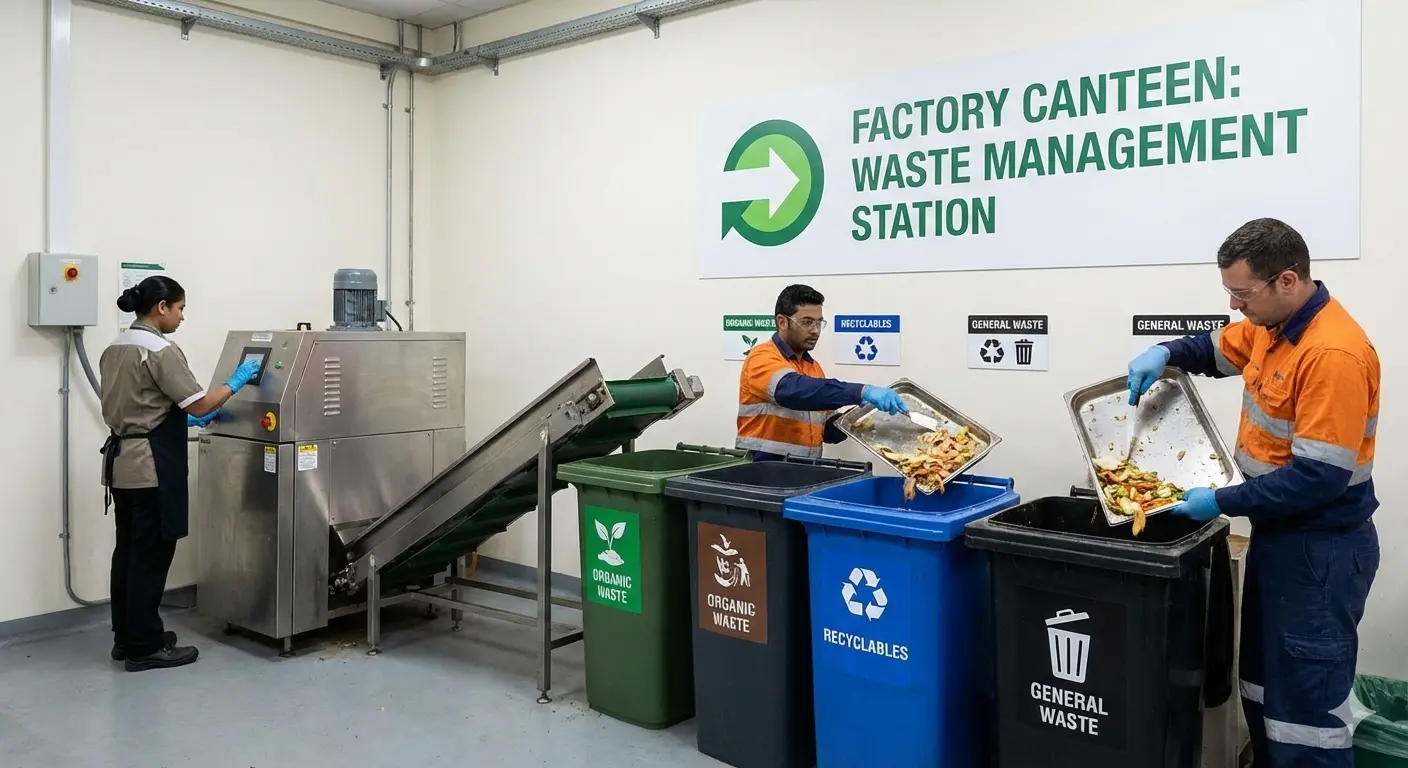
Types of Canteen Waste Management for Factories
-
Sourcelevel canteen waste management with menu design, demand planning, and portion control in factory canteens.
-
Canteen food waste management in manufacturing plants to handle plate waste, buffet leftovers, and surplus cooked food.
-
Factory canteen kitchen waste management covering prep waste, peelings, trimmings, expired ingredients, and rejected stock.
-
Canteen waste segregation and recycling in factories with separate streams for organic waste, recyclables, and reject waste.
-
Onsite canteen food waste to compost system for factories using in vessel composting system or Organic Waste Converter machines.
-
Offsite food factory waste management with companies waste management partners, biogas plants, or municipal collection.
-
Integrated factory waste management and manufacturing waste management that link canteen waste management with other industrial streams.
How to Choose the Canteen Waste Management for Factories
-
Start by mapping canteen waste management for factories, including daily quantities of wet and dry canteen waste.
-
Assess current cafeteria waste management practices and plate waste trends during different shifts and seasons.
-
Decide whether decentralized canteen food waste management in factories (onsite systems) or centralized offsite solutions suit your plant.
-
Compare industrial canteen waste management solutions based on capex, opex, manpower, and available space.
-
Ensure your factory canteen waste management system and canteen waste disposal procedure meet local standards for what is waste management in the food industry.
-
Include scalability for multilocation plants and franchise opportunities if you want a standard industrial canteen biodegradable waste management system.
How to Set Up a Canteen Waste Management for Factories
-
Step 1: Conduct a detailed audit of canteen waste management for factories, tracking generation by meal, counter, and department.
-
Step 2: Draft a written factory waste management plan that covers cafeteria waste management and canteen waste disposal procedure.
-
Step 3: Introduce clear canteen waste segregation and recycling in factories with colorcoded bins and visual instructions.
-
Step 4: Implement a factory canteen waste management system or canteen management system to track booking, billing, and consumption.
-
Step 5: Choose an onsite canteen food waste to compost system for factories such as in vessel composting system or automatic composter.
-
Step 6: Integrate the canteen organic waste management for industries with overall manufacturing waste management and EHS policies.
-
Step 7: Train kitchen teams and employees regularly on canteen food waste management and segregation best practices.
Major Causes of Food Waste in Factory Canteens
-
Overproduction due to lack of a database factory canteen waste management system and weak demand forecasting.
-
Generous portions, unlimited refills, and buffetstyle serving that ignore practical canteen waste management limits.
-
Poor cafeteria waste management planning with lastminute menu changes and inaccurate headcount information.
-
Weak stock rotation in food factory waste management, leading to expired ingredients and unsafe food.
-
Low awareness among workers about what is waste management in the food industry and why it matters to the company.
-
Unclear canteen waste disposal procedure, resulting in contamination of segregated waste and higher rejections.
Operational Strategies to Reduce Food Waste at Source
-
Use a robust factory canteen waste management system to enable prebooked meals and avoid cooking for absent staff.
-
Standardize serving sizes and plate sizes to improve canteen food waste management in manufacturing plants.
-
Introduce “cook in small batches” policy so industrial canteen food waste management focuses on fresh, demand based production.
-
Apply strict FIFO and FEFO across canteen organic waste management for industries to reduce expired stock.
-
Offer tasting counters or small trial portions for new dishes to support sustainable canteen waste management for industrial units.
-
Display daily food waste dashboards and targets to engage employees in green canteen waste management practices in factories.
Role of Technology and Canteen Management Systems (CMS)
-
A modern canteen management system is central to canteen waste management for factories because it links ordering, cooking, and serving.
-
CMS supports cafeteria waste management by tracking how many meals are booked, consumed, and wasted every day.
-
Integrating CMS with factory canteen waste management system dashboards enables realtime monitoring of kitchen and plate waste.
-
Digital reports help EHS teams refine factory waste management and manufacturing waste management strategies using hard data.
-
When CMS is combined with access control, it reduces pilferage, ghost entries, and redundant meals in industrial canteen food waste management.
Challenges in Canteen Waste Management for Factories
|
Challenge |
Description |
|
Data visibility |
Many factories lack accurate data on canteen waste management and composition, making planning difficult. |
|
Behaviour change |
Shifting longterm eating and disposal habits in factory canteen waste management systems takes time and training. |
|
Space & utilities |
Not every plant has sufficient area or power for an in vessel composting system or onsite composter. |
|
Regulatory clarity |
Plants must interpret what is waste management in the food industry according to local and national rules. |
|
Budget constraints |
Upfront investments in canteen waste management for factories compete with core production priorities. |
|
Vendor capacity |
Finding reliable industrial canteen waste management solutions and long term service support can be challenging. |
Core Components of a Canteen Waste Management for Factories
-
A documented factory waste management plan that clearly addresses canteen waste management and food factory waste management goals.
-
Structured canteen waste segregation and recycling in factories using colorcoded bins, labels, and simple pictorial guides.
-
A reliable factory canteen waste management system or CMS that captures meal bookings, consumption, and waste metrics.
-
A suitable industrial canteen biodegradable waste management system such as composting, biomethanation, or coprocessing.
-
Strong cafeteria waste management practices with daily checks, corrective actions, and audits by EHS or sustainability teams.
-
Clear canteen waste disposal procedure that defines responsibilities for kitchen staff, housekeeping, and companies waste management partners.
Go green with Pious organic waste composting solutions built for sustainable communities.
Key Benefits of Canteen Waste Management for Factories
-
Significant reduction in food costs when canteen waste management for factories focuses on accurate forecasting and portion control.
-
Lower transport and disposal bills by shifting from landfill to onsite canteen food waste to compost system for factories.
-
Improved compliance with what is waste management in food industry regulations and internal sustainability targets.
-
Better hygiene, fewer odour complaints, and a more pleasant dining environment due to efficient industrial canteen food waste management.
-
Positive brand image as a leader in sustainable canteen waste management for factories and manufacturing waste management.
-
New value creation from compost and biogas generated through canteen organic waste management for industries.
Technologies & Innovations in Canteen Waste Management for Factories
|
Technology / Innovation |
Use Case |
Benefit |
|
Factory canteen waste management system |
Tracks meals, waste, and costs in real time across shifts. |
Drives dataled canteen waste management decisions. |
|
Canteen management system (CMS) |
Integrates booking, billing, and access for factory canteen kitchen waste management. |
Cuts overproduction and pilferage. |
|
Handles canteen food waste to the compost system for factories with limited space. |
Fast, odour controlled composting onsite. |
|
|
Decentralized Waste Management Systems |
Campus or plant level systems that treat waste near the source. |
Reduce hauling, support sustainable canteen waste management for industrial units. |
|
IoTbased monitoring |
Sensors on bins and composters in industrial canteen biodegradable waste management systems. |
Optimize operations and ensure compliance. |
Pros and cons of Canteen Waste Management for Factories
|
Aspect |
Pros |
Cons |
|
Onsite canteen food waste composting |
Lower transport, visible impact, supports green canteen waste management practices in factories. |
Needs space, capex, and trained staff to run systems. |
|
Offsite industrial canteen waste management solutions |
Low operational complexity and access to expert companies waste management providers. |
Continuous fees, less direct control over final treatment and usage. |
Why Factories need for Canteen Waste Management
Factories need strong canteen waste management for factories because food costs and disposal charges directly affect margins.
Aligning canteen waste management with factory waste management and manufacturing waste management also supports compliance and ESG reporting.
By investing in industrial canteen waste management solutions and a robust factory canteen waste management system, plants can turn food waste into a resource instead of a liability.
Conclusion: Roadmap to a ZeroWaste Factory Canteen
A realistic roadmap to a zero waste factory canteen begins with understanding what is waste management in the food industry and evaluating your current setup by auditing canteen waste management for factories, including waste generation points, quantities, and plate waste patterns across shifts. This insight helps build a strong factory waste management plan that integrates cafeteria waste management, food factory waste management, and manufacturing waste management, supported by a factory canteen waste management system or canteen management system to collect reliable data and enable prebooking, portion control, and subsidy management.
Finally, introduce an industrial canteen biodegradable waste management system, such as in vessel composting systems or decentralized Waste Management Systems, so canteen food waste to compost systems for factories becomes a daily reality, not a long term dream.
FAQ's on Campus scale organic waste composter
-
What is a campus scale organic waste composter?
It is an onsite machine that converts segregated canteen food waste into usable compost for gardens and landscaping. -
Is it suitable for factory canteens?
Yes, it fits well with canteen waste management for factories and supports decentralized canteen food waste management in factories. -
How does it support canteen organic waste management for industries?
It gives a permanent solution where daily wet waste is processed at source instead of sending it to landfills. -
What inputs does the system need?
The system needs segregated organic waste, bulking agents like sawdust, power, and basic operator training.
