What Is Composting and Why Does It Matter?
The process of composting converts organic waste materials into nutrient-dense soil which reduces landfill waste while decreasing your environmental impact through lower disposal expenses. Composting functions as a controlled process which transforms organic waste into stable material that resembles soil and enhances soil health while decreasing methane emissions from landfills.
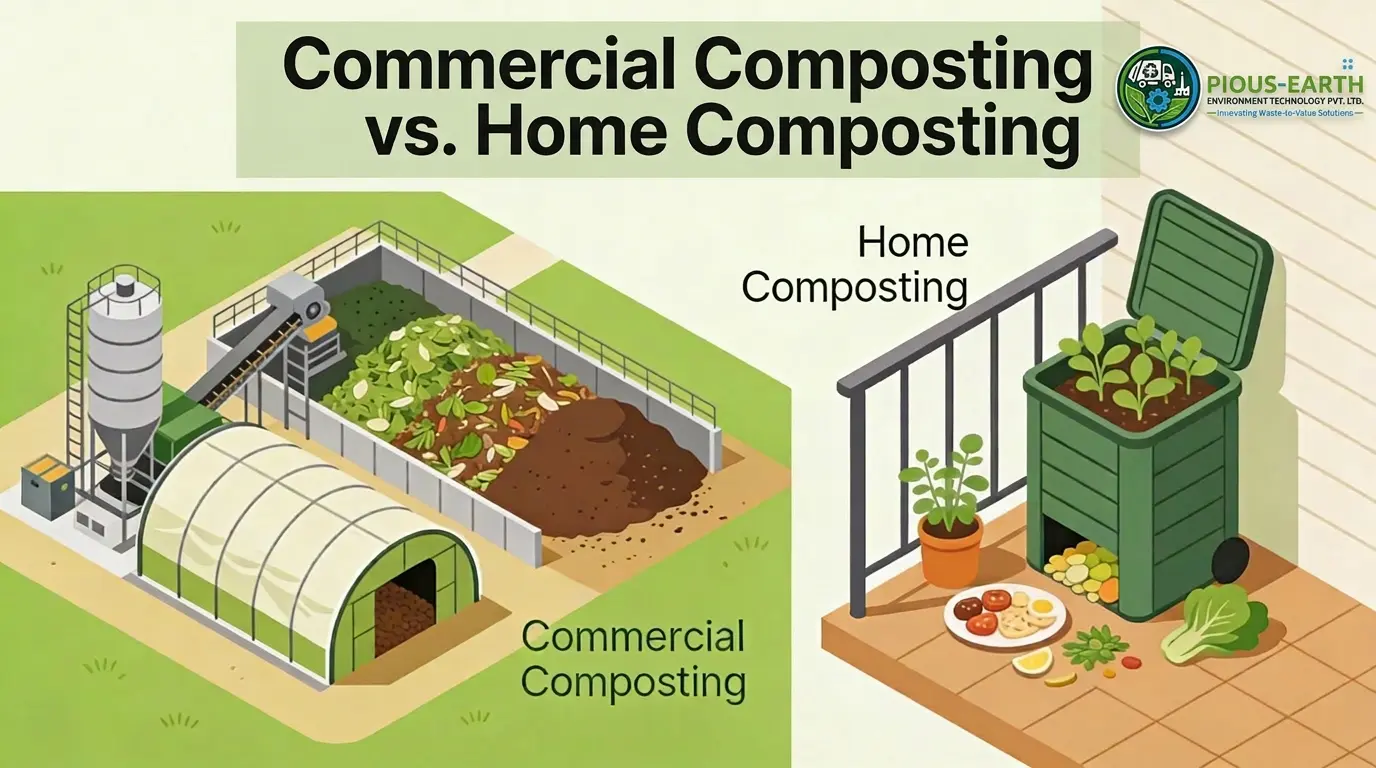
What Is Home Composting?
Home composting refers to the process of composting waste material which people perform through their own composting systems located in their backyards or balconies or community gardens.
-
The method uses basic home composting equipment which includes compost bins and tumblers and vermicomposting systems.
-
The compost system accepts kitchen scraps and garden waste but it typically excludes meat and dairy and oily food waste.
-
The system requires both greens and browns materials together with moisture and consistent turning to achieve optimal results.
-
Home composting proves more effective than municipal composting when you have access to outdoor areas.
What Is Commercial (Industrial) Composting?
Commercial composting is also called industrial composting, and uses large, professionally managed facilities to process organic waste from homes, businesses, and cities.
-
The system operates at its main commercial composting temperature range which exceeds 55°C through its implementation of strict operational procedures.
-
The system employs industrial composting procedures together with specialized equipment to process substantial material quantities which include different types of waste materials.
-
The facility accepts food waste together with dairy products and meat items and certified commercially compostable packaging materials and select food service products.
-
The system operates through two service types which include municipal commercial composting and residential home composting with curbside collection.
Commercial Composting vs. Home Composting: Key Differences
Commercial composting vs home composting revolves around scale, speed, accepted materials, and technology.
|
Factor |
Home Composting |
Commercial Composting |
|
Scale |
Small scale home composting for one household. |
Large scale commercial composting for cities and businesses. |
|
Location |
Home compost bin, backyard, or balcony system. |
Industrial composting facility or centralized plant. |
|
Temperature |
Lower, less consistent, often below 55°C. |
High, stable commercial composting temperatures above 55°C. |
|
Materials accepted |
Limited to vegetable scraps, coffee grounds, yard waste, and safe paper. |
Can include meat, dairy, compostable packaging, and some certified bioplastics. |
|
Processing time |
Months to over a year depending on management and climate. |
Weeks to a few months thanks to controlled industrial composting process. |
|
Management |
Done by the householder, low‑tech and low‑cost. |
Professionally run with monitored moisture, air, and turning equipment. |
|
End use |
Used in home gardens and small landscapes. |
Sold or distributed for farms, landscaping, and Green Building Certification Waste Management projects. |
Benefits of Commercial Composting
The comparison between Commercial Composting and Home Composting becomes essential because it shows how much waste municipalities and businesses need to handle in order to maintain public safety.
-
The system processes high quantities of food waste and garden refuse which would otherwise be disposed of in landfills.
-
The facility accepts various materials which include Commercial Food Waste Composting streams that supermarkets, canteens, and restaurants generate.
-
The organization employs In vessel composting systems and windrow operations to accelerate material decomposition while achieving better pathogen management.
-
Supports Decentralized Waste Management Systems when facilities are built closer to waste sources, reducing haulage and emissions.
-
Helps cities meet climate goals by cutting methane and supporting circular Waste Management Solutions.
-
Supports commercial composting vs backyard composting when businesses seek Green Building Certification Waste Management credits.
-
Creates marketable compost that can be sold to farms and landscapers, improving soil and water retention.
Benefits of Home Composting
Home composting and commercial composting provide different benefits because home composting gives you complete control to connect your kitchen waste directly to your garden space.
-
The system reduces landfill waste disposal from households which results in lower waste collection expenses and reduced greenhouse gas emissions.
-
Home composting provides benefits which include improved soil quality and enhanced plant growth and decreased need for artificial fertilizers.
-
The system provides you with instant access to compost which can be used for pots and lawns and vegetable beds.
-
Encourage beginners to understand food waste affects the environment in daily life through home composting.
-
Works without contracts, trucks, or fees, unlike some commercial composting services.
Challenges of Commercial Composting and Home Composting
Even the best composting methods comparison shows that both systems have trade‑offs you need to manage carefully. The table below highlights the main challenges of home composting and commercial composting to help you understand their practical limitations.
|
Aspect |
Home Composting Challenges |
Commercial Composting Challenges |
|
Space and access |
Requires outdoor space, which many urban residents lack. |
Industrial composting near me may be limited, with long transport distances. |
|
Accepted materials |
Cannot handle compostable packaging, meat, or dairy safely in most cases. |
Needs correct labeling so commercially compostable only items do not end up in recycling or landfill. |
|
Time and effort |
Needs regular turning, moisture checks, and patience. |
Requires investment, permits, and compliance with strict environmental standards. |
|
Contamination |
Risk of pests and odors if you get the mix wrong. |
Food‑service waste can contain plastics, metals, and glass that must be removed. |
|
Knowledge |
Home composting vs industrial composting explained resources are needed so people know what to add. |
Public confusion over how to dispose of commercially compostable items leads to contamination and higher costs. |
Which Composting Method Is Better?
The comparison between commercial composting and home composting shows that the optimal choice depends on three factors which include your waste production, your residential location and your desired level of participation.
-
Choose home composting vs commercial composting if you have space, garden needs, and time to manage a bin.
-
Choose commercial composting vs home if you are a business, institution, or dense urban household with access to collection services.
-
Use both together when cities run commercial composting systems vs home composting systems that complement backyard efforts.
-
Just remember that any Industrial Food Waste Management Systems must align with your city's climate goals and disposal economics.
Tips for Choosing the Right Composting Method
Your decision on Commercial Composting vs Home Composting should also reflect changing waste policy, disposal costs, and your sustainability goals.
-
Start by checking local guidance from the US EPA or your national environment agency on composting and food waste.
-
If you live in a flat, consider a small bin or worm farm and explore industrial composting near me options through your municipality.
-
For homeowners with gardens, compare composting methods such as cornposting vs vermicomposting and co composting vs composting mixed materials.
-
Businesses, hospitals, and factories can evaluate Canteen Waste Management for Factories, Hospital Waste Composting Equipment, and PLC Controlled Food Waste Converter units as part of Decentralized Waste Management Systems.
-
Housing societies can test a Composting Machine for Housing Societies to cut transport costs and landfill fees.
-
Check whether compostable packaging carries a home compostable or commercially compostable only label before deciding if compostable packaging can be composted at home or must go to a facility.
Real World Shifts in Waste Economics
Policy shifts and rising landfill or incineration costs are making Decentralized Waste Management Systems and on‑site composting more attractive to businesses.
-
Landfill taxes and emissions trading schemes are increasing the true cost of waste and incineration.
-
Companies are exploring on‑site or local commercial organic waste composting vs home organic waste composting to cut tonnage and transport.
-
Solutions like advanced in‑vessel units support commercial composting process efficiency while keeping operations closer to the waste source.
Specialized Commercial Composting Applications
Commercial composting services vs home composting methods can tackle specialized waste streams that households cannot handle safely.
-
Commercial composting for meat and dairy uses controlled temperatures and retention times to prevent odors and pests.
-
Industrial composting facility operators can integrate Canteen Waste Management for Factories or Industrial Food Waste Management Systems to capture more organics.
-
Hospitals may deploy Hospital Waste Composting Equipment for suitable organic fractions, keeping hazardous waste in separate streams.
-
Large campuses can explore Franchise Opportunities around commercial composting systems vs home composting systems to serve surrounding communities.
Home Composting vs Industrial Composting Benefits for Households
For most households, home composting vs industrial composting provides the most direct benefits when space and time allow.
-
Turning food scraps into compost at home reduces the need to buy soil improvers and fertilizers.
-
Backyard composting vs commercial composting avoids truck traffic and the emissions from moving waste long distances.
-
Home composting vs commercial composting difference in control matters when you care about every input to your garden.
-
Resources from agencies like the EPA and national environment bodies provide home composting for beginners guides.
Co Composting vs Composting and Other Methods
When you research types of composting methods, you will see co composting vs composting single waste streams, along with vermicomposting and in‑vessel systems.
-
Co‑composting mixes different organic wastes, such as food scraps and biosolids, to balance nutrients and moisture.
-
Vermicomposting uses worms to process food waste at lower temperatures, ideal for small indoor systems.
-
Comparing commercial composting vs home composting difference in method helps you choose a system that fits your context and regulations.
Conclusion
Both commercial composting and home composting serve as effective methods for managing organic waste. The best option depends on your space and waste needs, but both methods help decrease landfill waste while promoting pious and responsible environmental practices..
Frequently Asked Questions
Q1. What is home composting?
Home composting means turning your kitchen and garden waste into compost in a bin or pile at home using simple tools and methods.
Q2. What is commercial composting?
Commercial composting is a large scale, professionally managed process that turns organic waste and some packaging into compost at industrial facilities.
Q3. Can compostable packaging be composted at home?
Only items certified as home compostable belong in backyard systems; commercially compostable packaging needs industrial conditions.
Q4. What waste goes to commercial composting?
Food scraps, yard waste, some certified compostable food‑service items, and organic commercial waste streams typically go to commercial composting where accepted.
Q5. How do I start home composting for beginners?
Begin with a small bin, add a mix of greens and browns, keep it moist but not wet, and turn the pile regularly for air and faster breakdown.
