Difference Between Food Loss and Food Waste: Definitions, Causes, and Solutions
Ever wondered about the food waste vs food loss debate? Many folks search for what is food waste or what is food loss and waste, but grasping the food loss and waste difference explained truly matters. This guide breaks down the difference between food loss and food waste with examples, causes, and fixes.
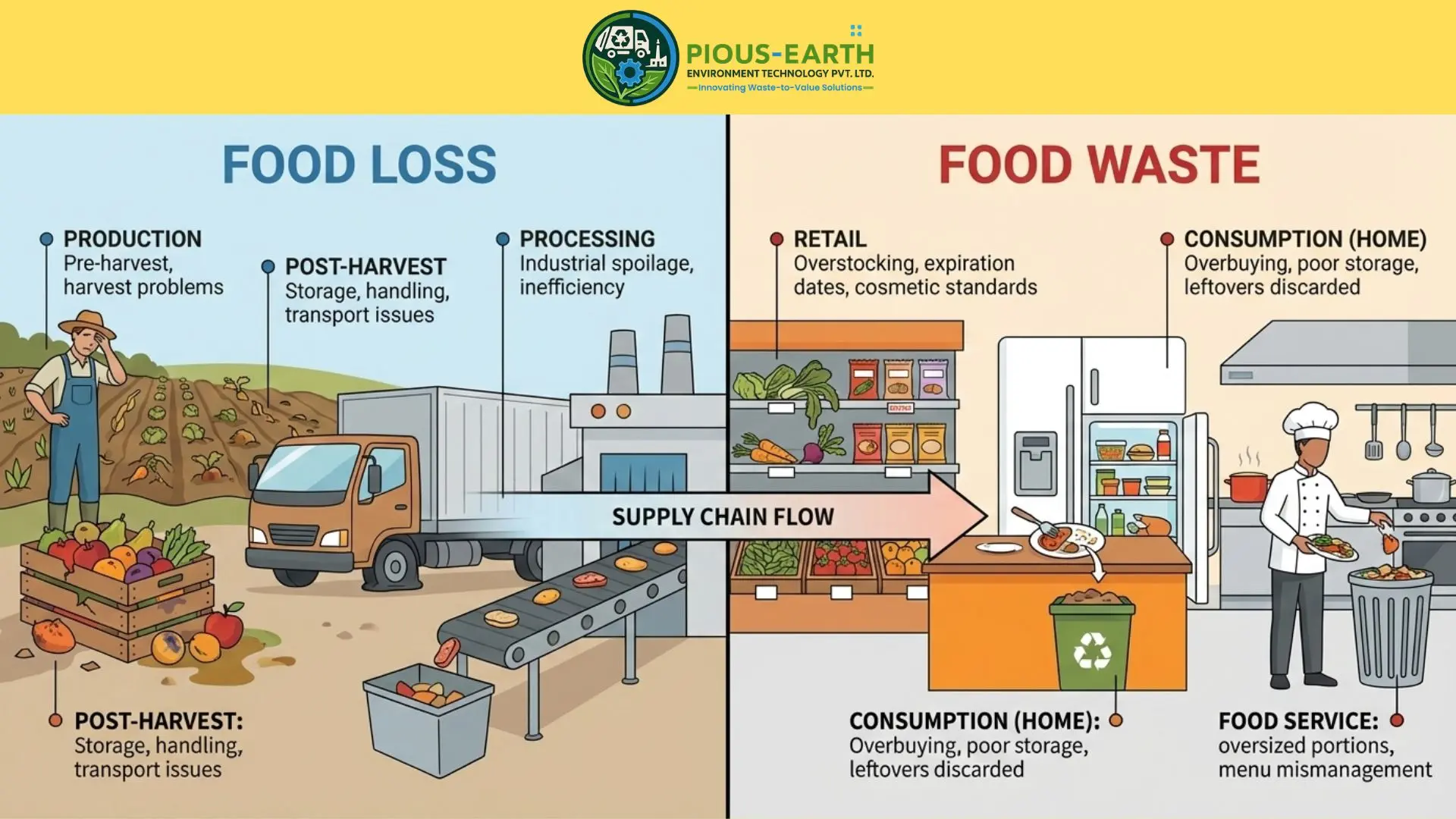
Understanding Food Loss and Food Waste
Food loss and food waste plague the food supply chain worldwide. Global food losses and food waste hit shocking levels each year. Understanding these terms helps tackle food waste and poverty links too.
What Is Food Loss? A Simple Definition
Food loss happens early, often at farms due to mishandling or pests. It covers edible parts lost before retail stages. Think crops ruined by weather before harvest.
What Is Food Waste? A Simple Definition
Food waste occurs later, when good food gets tossed by people. This includes scraps at homes or stores despite being edible. Overbuying leads to this common issue.
Stages of Food Loss and Food Waste
Food loss and waste strike at key points in the journey from farm to fork. Here's a quick look at food loss and waste in the food supply chain stages.
-
Farm Level: Harvest fails or poor storage hits here, marking difference between food loss and food waste at farm level.
-
Processing: Machinery glitches or quality cuts cause losses.
-
Distribution: Transport damage leads to discards.
-
Retail Level: Ugly produce gets rejected, while Canteen Waste Management for Factories helps reduce large-scale food waste in industrial setups.
-
Household Level: Expired buys pile up, highlighting difference between food loss and food waste at household level.
Core Difference Between Food Loss and Food Waste
The food waste vs food loss meaning boils down to timing and intent. Food loss stems from inefficiencies; food waste from behavior. Check this table for food loss and waste differences explained.
|
Aspect |
Food Loss |
Food Waste |
|
Stage |
Pre-retail (farm to processing) |
Post-retail (retail to consumer) |
|
Main Cause |
Technical issues, nature |
Consumer habits, overpurchase |
|
Where Common |
Developing countries |
Developed countries |
|
Examples |
Spoiled harvest, pest damage |
Uneaten leftovers, trimmed fats |
This table nails the food waste food loss difference clearly.
Causes of Food Loss and Food Waste
Many factors fuel these problems across chains. Data on food waste shows billions lost yearly. Let's list top triggers.
-
Poor infrastructure in developing countries boosts food loss.
-
Strict beauty standards at retail spike waste.
-
Overstocking by supermarkets leads to discards.
-
Consumer habits like big portions cause household waste.
-
Supply chain gaps worsen global food losses and food waste.
Food waste vs wastage often confuses folks, but both mean avoidable discards. Food wastage of food waste ties to poverty too.
Smart Strategies to Prevent Food Loss and Food Waste
Tackling the difference between food loss and food waste needs action. Solutions vary by stage, including the use of Industrial Food Waste Management Systems at processing and manufacturing levels. See this table for differences between food loss and food waste solutions.
|
Stage |
Food Loss Strategies |
Food Waste Strategies |
|
Farm |
Better storage, pest control |
N/A |
|
Processing |
Efficient tech, quality sorting |
Repurpose byproducts |
|
Retail |
Sell "ugly" produce |
Dynamic pricing for near-expiry |
|
Household |
N/A |
Meal planning, composting |
These steps cut the difference between food loss and food waste statistics sharply.Use an in vessel composting system to efficiently turn food scraps into compost.
How You Can Help Reduce Food Loss and Food Waste
You hold power in this fight against food waste vs food loss. Small changes add up big. Here's how.
-
Shop smart: Buy only what you need to dodge household waste.
-
Use apps for expiry tracking and portion control.
-
Donate extras to food banks, easing food waste and poverty.
-
Compost scraps using a Composting Machine for Housing Societies to turn waste into soil gold.
-
Support farm-to-table buys for fresher goods.
Cities are adopting decentralized waste management systems to tackle food waste at the community level.
Environmental Impact of Food Loss and Food Waste
These issues harm our planet deeply. They guzzle resources for nothing. Key effects include:
-
Methane from landfills fuels climate change.
-
Wasted water equals millions of pools yearly.
-
Lost farmland strains ecosystems.
-
Biodiversity drops as farms expand needlessly.
-
Carbon footprint rivals global transport.
The difference between food loss and food waste in developing countries hits nature harder due to scale. Implementing effective waste management solutions reduces environmental impact and landfill methane emissions.
Government Initiatives to Reduce Food Waste and Food Loss
Nations step up with smart programs. Policies target chains effectively. Notable efforts:
-
The U.S. USDA pushes farm donations and tech grants.
-
EU goals cut waste 50% by 2030 via laws.
-
India's FSSAI bans expiry discards at stores.
-
UN's SDG 12.3 aims to halve waste per capita.
-
Brazil taxes waste, funds recovery.
These curb food loss vs food waste pious efforts globally.
Conclusion
Grasping the difference between food loss and food waste with examples empowers change. From farm-level fixes to household tweaks, solutions abound. Act now to slash global food losses and food waste for a sustainable tomorrow.
Frequently Asked Questions (FAQs)
Q: What is the difference between food loss and food waste?
Food loss hits early supply stages; food waste happens later by consumer choice.
Q: Food waste vs food loss: Which is worse in developed countries?
Food waste dominates homes and stores there.
Q: What are food waste examples?
Trimmed veggie peels or uneaten leftovers count.
Q: Difference between food loss and food waste in the supply chain?
Loss pre-retail; waste post-retail.
Q: How to prevent food loss and waste at home?
Plan meals and store right.
