How Does Food Waste Affect the Environment?
Waste from food has increasingly snuck into our daily lives, hitting Earth at the global level. The rise in greenhouse gases and the waste of irreplaceable resources are not affordable. So yes, let's step into the ways food waste affects the environment and why finally addressing it is even more far-reaching as a fact.
What Is Food Waste?
Food waste refers to the situation where food that could still be safely consumed is instead discarded. It is commonly witnessed from households, restaurants, and supermarkets due to overbuying, overproduction of eatables, or storing in fridges for too long without sufficient use. In other words, it is food that no one would eat and is a poor object for proper management.
Difference Between Food Loss and Food Waste
|
Basis |
Food Loss |
Food Waste |
|
Meaning |
Reduction in food quantity or quality before it reaches consumers |
Food that is fit to eat but is thrown away by retailers or consumers |
|
Where it happens |
Farms, storage, processing, transportation |
Homes, restaurants, supermarkets |
|
Stage of supply chain |
Production and supply stage |
Retail and consumption stage |
|
Main causes |
Poor storage, lack of technology, pests, transport issues |
Overbuying, cooking too much, poor meal planning, expiry dates |
|
Common in |
More common in developing countries |
More common in developed countries |
|
Example |
Fruits rotting during transport |
Throwing away leftover food |
Global Food Waste Statistics
-
The world tosses 1.05 billion tons yearly, nearly 19% of production.
-
Households drive 60% in wealthier spots.
-
Each European weighs 121 kg per year; Asia sees 74 kg per person.
-
Without change, it could jump 44% by 2030.
Main Causes of Food Waste
Overbuying and picky standards fuel the food waste problem in the world. Storage slip-ups let good food rot unnoticed. Buffets pile plates high, leading to scraps.
-
Shoppers grab too much then forget it in the fridge.
-
Retail rejects "ugly" fruits and veggies despite being fine to eat.
-
Farms overproduce chasing profits, creating surplus.
-
Restaurants overserve portions bigger than needed.
-
Supply chains face delays that spoil goods en route.
Large industries are implementing canteen waste management for factories to handle bulk food leftovers generated daily.
How Does Food Waste Affect the Environment?
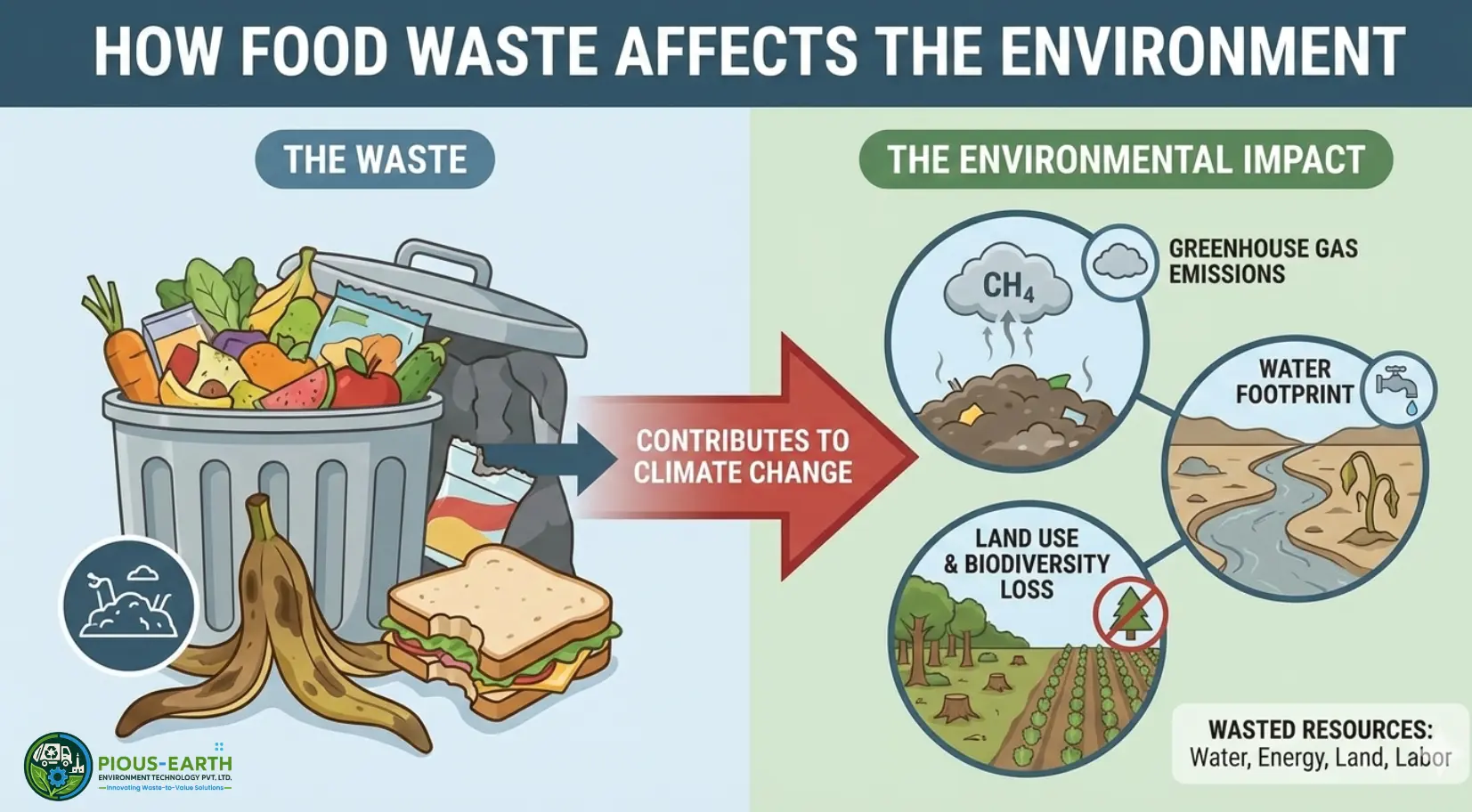
When food rots in dumps, it spits out methane, a heat-trapping beast. This ties straight to food waste and climate change. Effects of food waste on the environment stretch from air to oceans.
|
Environmental Impact |
Description |
Key Stat |
|
Food waste greenhouse gas emissions |
Dumped food ferments into potent methane. |
8-10% of all human-caused GHGs. |
|
Methane from food waste landfills |
No oxygen means methane overload. |
Matches 3.3 billion tons of CO2 yearly. |
|
Food waste contribution to global warming |
Fuels hotter temps worldwide. |
Tops aviation's total output. |
|
Food waste carbon footprint |
Growing and hauling wasted food burns fuel. |
4.4 Gt CO2 equivalent annually. |
|
Impact of wasted food on environment |
Ties up farmland pointlessly. |
Uses 28% of arable land. |
|
How food waste harms ecosystem |
Drives deforestation for more crops. |
Biodiversity takes a dive. |
|
Food waste pollution effects |
Leaches into rivers and soils. |
Sparks deadly algae blooms. |
|
Rotting food environmental damage |
Toxins seep long-term into the ground. |
Pollutes for generations. |
|
Food waste water waste impact |
Growing tossed food gulps water. |
250 km³ lost each year, 9% of freshwater. |
Economic and Social Consequences of Food Waste
Food waste is a serious issue in India, affecting the economy, society, and environment at a large scale.Many businesses are now turning toward structured waste management solutions and exploring sustainable business models, including franchise opportunities in the organic waste recycling sector.
|
Aspect |
Impact |
Examples / Data |
|
Economic Impact |
Huge financial losses in production, storage, and distribution |
India loses billions of rupees annually due to post-harvest losses, especially in fruits and vegetables (about 15–20%). |
|
Food Prices |
Increases market prices |
Wastage in supply chains reduces availability, leading to higher food costs for consumers. |
|
Social Impact |
Hunger and malnutrition remain high |
Around 800+ million people receive subsidized food under the National Food Security Act, yet hunger and malnutrition persist. |
|
Environmental Impact |
Contributes to pollution and climate change |
Food waste in landfills produces methane; it also wastes water, land, and energy used in farming. |
How to Reduce Food Waste at Every Level
Tackling causes and effects of food waste needs action everywhere. Plan purchases to match real needs. Small shifts yield big wins.Cities are now adopting decentralized waste management systems to treat food waste closer to the source instead of sending it to landfills.
-
Farms harvest every bit and donate extras.
-
Stores sell imperfect produce at discounts.
-
Eateries offer smaller plates and take-home boxes.
-
Homes rotate stock first-in-first-out and freeze smart.
-
Governments tax landfills to push better habits.
Residential communities are installing composting machines for housing societies to convert daily kitchen waste into nutrient-rich compost.
Innovative Technologies Fighting Food Waste
Smart tools now hunt down waste before it happens. Apps nudge us on expiry dates. Enzymes extend shelf life naturally.
-
AI cameras scan fridge contents for use-by alerts.
-
Blockchain logs freshness from farm to fork.
-
Aerobic digesters churn scraps into energy sans methane.
-
Robots sort wonky veggies for sale.
-
Preservation sprays keep produce fresh longer.
Global Efforts and Sustainability Goals
Countries rally to cut waste under UN targets. Reporting rules force transparency. Tech grants speed green shifts.
|
Initiative |
Goal |
Progress |
|
UN SDG 12.3 |
Halve waste per person by 2030. |
10% of nations track well. |
|
EU Landfill Ban |
Block organic discards. |
25% drop since 2010. |
|
US EPA Food Recovery |
Prioritize prevention first. |
Potential $5B savings. |
|
Australia Programs |
Curb impact of food waste in Australia. |
Targets 7.3M tons yearly. |
Top Features and Benefits
Follow these steps to slash your share of waste. Consistency builds habits fast. Track to see real change.
-
Check fridge contents weekly for rescues.
-
Freeze leftovers right after meals.
-
Set up home composting for scraps.
-
Shop with lists to avoid impulse buys.
-
Serve portions that match appetites.
Benefits hit your wallet and the world. How does less food waste affect the environment? It lightens your carbon load overnight.
Why Reducing Food Waste Is Critical for the Planet’s Future
Why is food waste a problem? It supercharges the environmental impact of food waste daily. Halting it cools the planet.
-
Grabs land is better used for trees.
-
Guzzles water during global droughts.
-
Crushes wildlife habitats relentlessly.
-
Pollutes seas with nutrient overload.
Final Thoughts on Environmental Impact of Food Waste
Food waste harms the environment by releasing methane in landfills, wasting water, energy, and land, and contributing to resource depletion and pollution. It also exacerbates climate change and biodiversity loss. Reducing food waste can help conserve resources, lower emissions, and support sustainability.
Companies like Pious are promoting advanced composting technologies and decentralized waste systems to help businesses and communities reduce their environmental footprint.
Frequently Asked Questions
Q: What is food waste?
Edible items discarded needlessly from farm end to plate.
Q: How does food waste affect the environment?
Pumps GHGs, wastes water, dirties soil through methane release.
Q: How does food waste affect climate change?
Drives 8% of emissions, rivaling major economies.
Q: How does food waste affect the environment and human health?
Pollution sparks breathing woes; scarcity threatens nutrition.
Q: How much food is wasted globally each year?
Around 1.05 billion tons of food are wasted every year, which is nearly 19% of total food production globally.
