ESG & CSR Waste Management Solutions: A Complete Guide for Sustainable Businesses
Sustainable businesses today are increasingly integrating Waste Management Solutions into their ESG and CSR frameworks. Doing so ensures environmental compliance, improves operational efficiency, and supports long-term corporate sustainability.
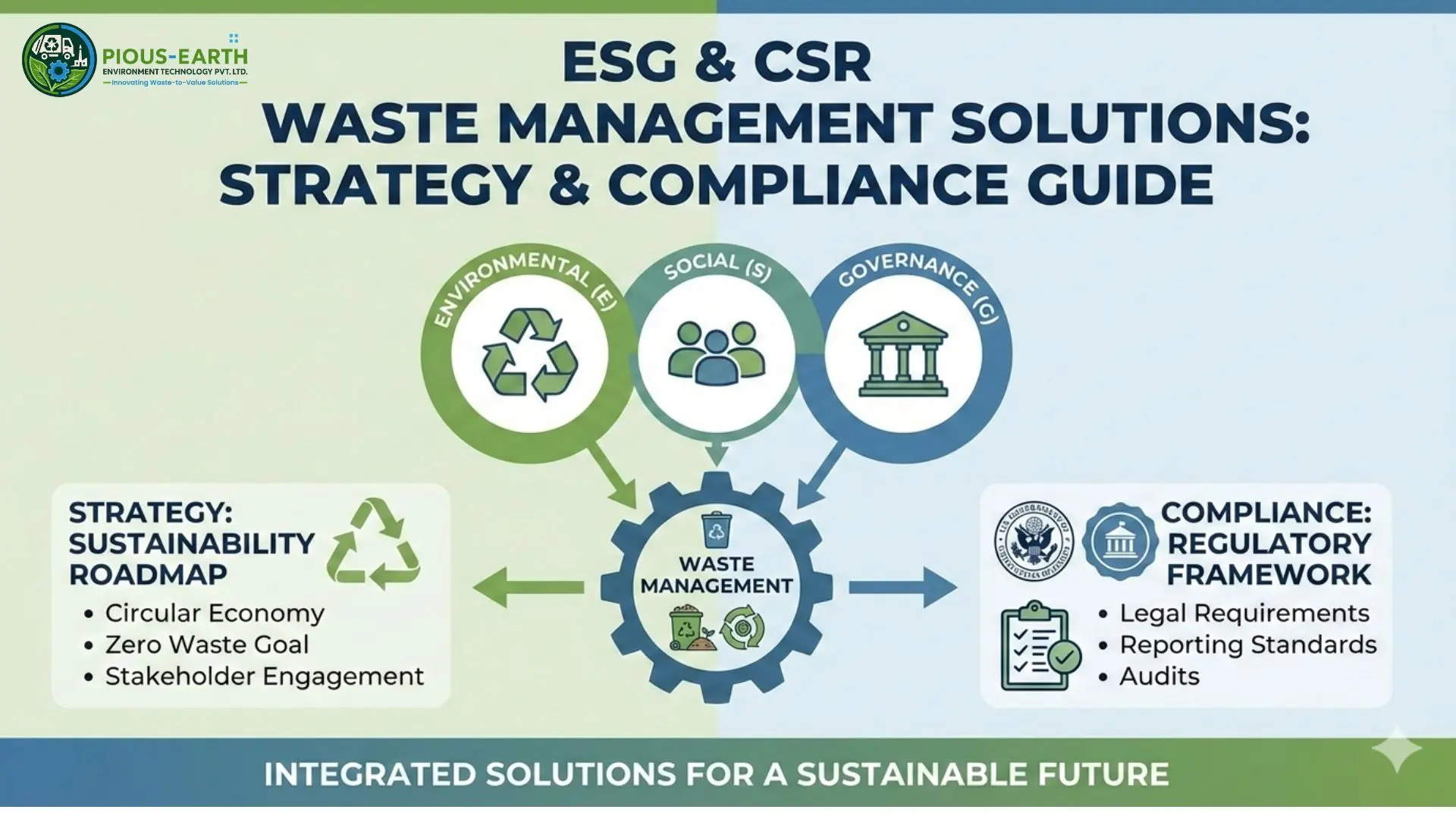
What Is ESG in Waste Management?
Organizations adopt net zero waste strategies to minimize landfill contribution. This includes resource recovery solutions, recycling programs, and initiatives like Industrial Food Waste Management Systems or In vessel composting systems to process organic waste efficiently.
Social Responsibility Through Community Waste Programs
CSR programs encourage stakeholder engagement in CSR and community participation, including:
-
Community recycling drives
-
Rural waste infrastructure projects
-
School and urban awareness campaigns
-
Recycled waste utilization programs
Governance and Compliance in Waste Reporting
Strong governance ensures environmental compliance through structured audits, reporting aligned with sustainability reporting standards, and tracking environmental performance indicators for transparency and accountability.
Understanding CSR Waste Management Initiatives
CSR Waste Management in Manufacturing Companies
Many manufacturers implement Canteen Waste Management for Factories and Industrial Food Waste Management Systems to manage organic waste effectively while contributing to ESG goals.
CSR Projects for Rural Waste Infrastructure
The sustainable waste management system for communities receives support through CSR programs which implement decentralized waste management solutions that include Composting Machines for Housing Societies and Hospital Waste Composting Equipment.
Plastic Waste Management Under CSR
CSR programs promote segregation, recycling, and compliance with regulations like Extended Producer Responsibility (EPR), boosting overall ESG performance.
Why Waste Management Is Critical for ESG Reporting
|
ESG Area |
Waste Contribution |
Business Impact |
|
Environmental |
Reduced landfill & emissions |
Improved ESG score |
|
Social |
Community waste programs |
Enhanced brand reputation |
|
Governance |
Transparent reporting |
Investor confidence |
Proper waste management addresses questions like How Does Food Waste Affect the Environment, reducing methane emissions, carbon footprint, and water wastage.
ESG-Compliant Waste Management Solutions
Businesses can adopt solutions such as:
-
Source Reduction – Efficient processes and sustainable product design work together to decrease waste production.
-
Recycling & Circular Practices – Programs have been established to recycle materials while reusing and repurposing them.
-
Safe Hazardous Waste Handling – Chemicals and industrial waste require proper collection methods and treatment techniques and disposal procedures.
-
Employee & Community Engagement – The organization provides waste education programs to its stakeholders.
-
Carbon Footprint Reduction – The organization achieves its emissions goal through waste management system operation optimization.
Benefits of ESG Waste Management Solutions
-
Improved brand reputation and Pious corporate image
-
Cost savings through recycling and recycled waste utilization programs
-
Enhanced investor confidence and stronger ESG ratings
-
New green Franchise Opportunities in waste solutions
Government Regulations Driving ESG Waste Compliance
-
Extended Producer Responsibility (EPR) mandates
-
Plastic Waste Management Rules
-
Corporate waste disclosure and compliance requirements
How to Build an ESG Waste Management Strategy
-
Conduct a thorough waste audit
-
Set measurable waste reduction targets
-
Implement resource recovery solutions and on-site composting
-
Partner with certified waste management providers
-
Track progress through environmental performance indicators
Global ESG Frameworks That Guide Waste Management Reporting
To build a strong ESG-aligned waste management strategy, businesses must follow globally recognized sustainability frameworks. These frameworks help organizations measure, disclose, and improve their environmental performance in a standardized way.
Global Reporting Initiative (GRI)
The Global Reporting Initiative (GRI) provides one of the most widely adopted sustainability reporting standards worldwide.
Waste specifically focuses on:
-
Total waste generated
-
Waste diverted from disposal
-
Waste directed to landfill
-
Hazardous and non-hazardous waste
-
Waste treatment and recovery methods
Companies use this framework to improve transparency and align with global sustainability expectations.
Sustainability Accounting Standards Board (SASB)
The SASB establishes environmental social governance standards which apply specifically to different industry sectors. The organization SASB assists businesses in determining which sustainability matters will have financial impact through their assessment of waste production and recycling performance and landfill usage.
United Nations Sustainable Development Goals (SDGs)
The United Nations (UN) introduced the Sustainable Development Goals (SDGs), which directly connect waste management to global sustainability targets.
Key goals related to waste include:
-
SDG 11: Sustainable Cities and Communities
-
SDG 12: Responsible Consumption and Production
-
SDG 13: Climate Action
Aligning CSR waste initiatives with these goals enhances global credibility and long-term sustainability positioning.
How does waste impact ESG score?
-
Repercussion to Environment: Advanced waste production and poor disposal contribute to an engaging hurting impact to "E" in an ESG perspective.
-
Regulatory Compliance: Failure to comply with regulations on waste can have negative impact upon ESG ratings
-
Reputation and Stakeholder Trust: Mismanaged waste reduces investor and consumer confidence
-
Carbon Footprint: the decomposition and disposal of waste contribute to greenhouse gases
Why is waste reporting important for investors?
• Transparency – Provides investors with clear insight into a company’s environmental practices and risks.
• Risk Management – Highlights potential liabilities from improper waste handling or regulatory non-compliance.
• ESG Performance Assessment – Waste data directly influences ESG scores, affecting investment decisions.
• Operational Efficiency – Shows how well a company manages resources, which can indicate cost savings.
• Reputation and Brand Value – Demonstrates commitment to sustainability, improving investor confidence.
• Long-Term Value Creation – Encourages sustainable practices that support enduring profitability and resilience.
Key ESG Waste Management Metrics
Organizations focused on ESG reporting typically track the following indicators:
-
Total waste generated (annual tonnage)
-
Waste diversion rate
-
Recycling percentage
-
Hazardous waste ratio
-
Scope 3 emissions related to waste
-
Landfill reduction targets
-
Waste intensity per unit of production
Tracking these indicators ensures alignment with sustainability reporting standards and regulatory requirements.
Step-by-Step Guide to Building an ESG Waste Management Strategy
1. Conduct a Comprehensive Waste Audit
Identify all waste streams generated across operations, including:
-
Organic waste
-
Plastic and packaging materials
-
Metal and glass
-
Electronic waste
-
Hazardous chemical waste
A detailed audit provides a baseline for future reduction and recycling targets.
2. Set Measurable Waste Reduction Goals
Establish clear, quantifiable objectives, such as:
-
50% landfill waste reduction within two years
-
70% waste diversion rate through recycling and composting
These goals should be realistic, time-bound, and aligned with ESG reporting frameworks.
3. Implement Segregation at Source
Source-level segregation is essential for efficient waste management. Separate organic, recyclable, and hazardous materials to streamline processing and ensure compliance.
4. Adopt On-Site Processing Where Feasible
Decentralized solutions like in-vessel composting or on-site organic waste processing can reduce landfill dependency and improve resource recovery.
5. Track, Measure, and Report Progress
Regular monitoring through key performance indicators ensures transparency. Companies should report progress in annual ESG reports to stakeholders, highlighting improvements in waste diversion and emissions reduction.
Regulatory Environment Supporting ESG Waste Compliance
Waste management regulations are increasingly strict, requiring companies to comply with:
-
Extended Producer Responsibility (EPR) rules
-
Plastic Waste Management regulations
-
Corporate environmental disclosure requirements
Compliance strengthens the governance pillar of ESG frameworks and reduces legal risks.
Future Trends in ESG Waste Management
Emerging trends in the field include:
-
AI-based waste tracking systems
-
Blockchain-enabled waste traceability
-
Integration of waste reduction with carbon credit programs
-
Commitments to zero waste to landfill
-
These innovations make waste management a strategic sustainability driver rather than just a compliance activity.
Case Study: ESG Waste Management Implementation in Corporates
A mid-sized manufacturing company adopted Industrial Food Waste Management Systems, Decentralized Waste Management Systems, and In vessel composting systems. Within a year, they reduced landfill waste by 60%, improved ESG metrics, and reported strong compliance under sustainability reporting standards.
Conclusion
ESG and CSR-focused waste management is essential for sustainable business operations. By conducting comprehensive audits, setting measurable targets, adopting efficient processing methods, and aligning with global reporting frameworks, companies can improve environmental performance, enhance stakeholder confidence, and contribute meaningfully to global sustainability goals.
FAQs on ESG & CSR Waste Management Solutions
Q1. What is ESG waste management?
Integrating waste reduction, recycling, and disposal practices into ESG frameworks to meet environmental compliance and track ESG goals & metrics.
Q2. How does CSR support waste reduction?
Through stakeholder engagement in CSR, community recycling drives, rural infrastructure projects, and funding recycled waste utilization programs.
Q3. What are key ESG waste metrics?
Waste diversion rates, landfill reduction, recycling percentages, Scope 3 emissions, and progress toward net zero waste strategies.
Q4. How do Waste Management Solutions improve sustainability reporting?
Structured audits and resource recovery solutions help companies align with sustainability reporting standards and demonstrate transparent environmental performance indicators.
Q5. Why is reducing food and industrial waste important?
It reduces operational costs, lowers carbon emissions, improves reputation, ensures regulatory compliance, and enhances ESG ratings.
