Future of Composting Technology: Smart Waste Solutions
As cities expand and food waste mounts, advanced composting technology is becoming a core solution for sustainable waste management and circular economy waste solutions. It helps tackle green waste and organic waste management while reducing landfill pressure and climate impact.
With modern composting methods, smart composting machines and automated composting system designs, organic waste can be turned into a resource instead of a burden. These innovations also answer real concerns behind searches like “negative effects of composting” and “is composting bad for the environment” by making the process cleaner and more controlled.
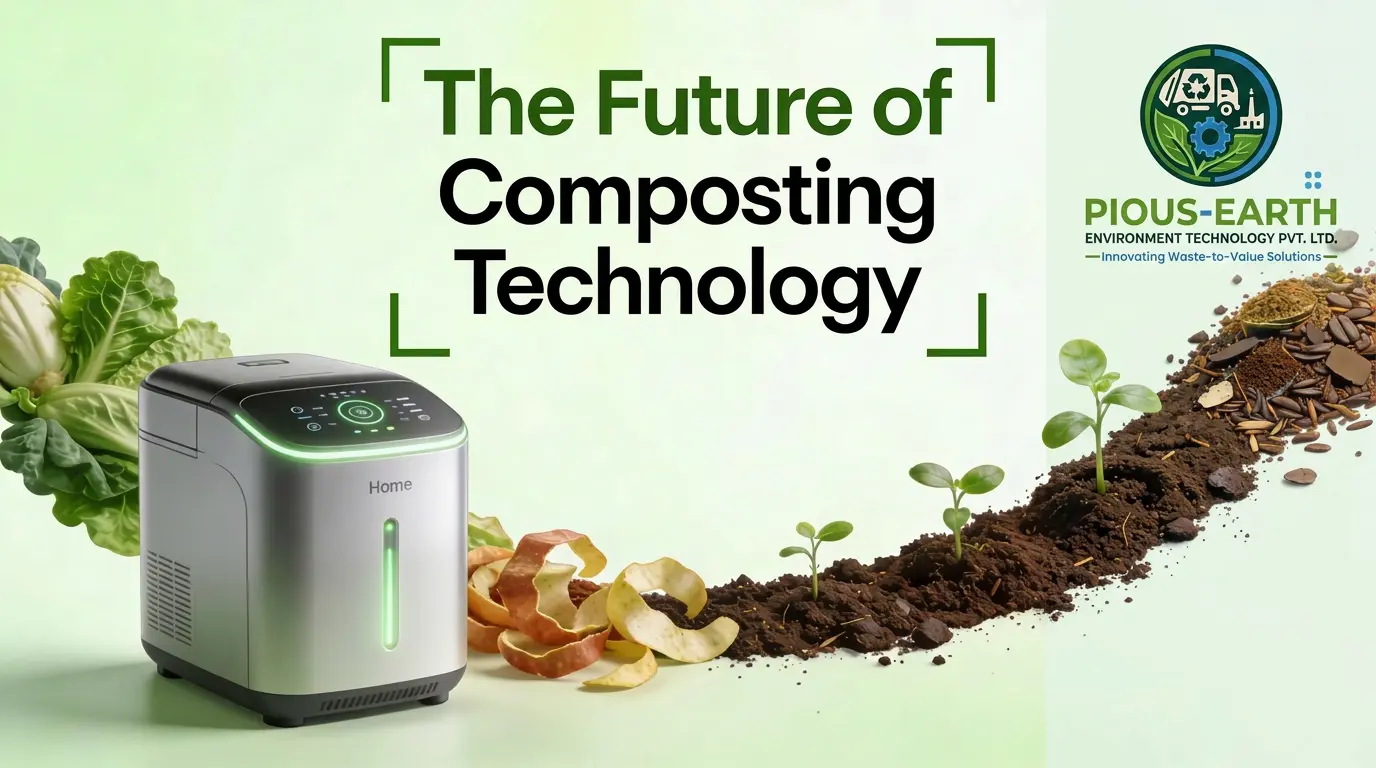
Why Composting Technology Is Important for Waste Management
Composting technology diverts organic waste from landfills, reduces methane emissions, and produces valuable soil amendments for homes, businesses, and cities. According to the United Nations Environment Programme, nearly 931 million tonnes of food waste are generated globally every year, making organic waste management a critical environmental challenge.
-
Composting diverts food scraps and garden waste from landfills and converts them into nutrient-rich organic compost.
-
The system decreases greenhouse gas emissions which result from non-regulated dumping while it solves public worries about composting hazards that stem from poor compost management.
-
Supports soil health, farming and green building certification waste management with nutrient-rich compost.
-
The system allows for decentralized waste management because it processes organic waste at its production site instead of transporting the waste to distant treatment facilities.
-
Food waste composting becomes essential to the circular economy waste solutions because it serves as more than just a waste disposal method.
Evolution of Composting Technology
Traditional Composting Methods
Traditional composting methods depend on open piles and pits and use basic composting equipment which requires workers to manually turn the materials. The system operates effectively, but it requires considerable space and creates odor and pest problems that need active management to prevent.
Industrial Composting Innovations
Industrial composting innovations introduced aerated static piles, windrows and in-vessel composting system designs that allow faster, larger-scale processing. These systems enabled commercial composting and municipal composting for cities and industries.
The Shift Toward Smart and Automated Systems
The present day composting technology development process uses three main systems which include sensor based composting systems and automated composting machine designs together with data driven composting systems.
Smart Composting Technologies for Waste Management
AI-Powered Compost Monitoring Systems
AI composting systems use sensors and software to monitor temperature, moisture, and oxygen in compost. If conditions change, the system automatically adjusts airflow or mixing to maintain the ideal environment.
IoT-Enabled Compost Bins
IoT enabled composters and IoT waste management systems use connected sensors to measure fill levels, process status and environmental conditions in bins. This makes food waste composting more visible, manageable and easier to integrate into smart waste management strategies.
Smart Sensors for Temperature, Moisture, and Aeration
Smart sensors are a core part of advanced composting technology, monitoring the conditions that drive microbial activity. They help prevent issues linked with the negative effects of composting, such as odour, leachate and excessive emissions.
Real Time Data Tracking
-
Real-time monitoring sends information to digital composting management platforms and compost operations monitoring software.
-
Operators can quickly detect issues, refine composting methods and document performance in any composting technology pdf or report.
Automated Aeration and Mixing
-
Intelligent composting control systems operate blowers, valves and mixers automatically to maintain ideal composting conditions.
-
Automated composting system designs, including PLC Controlled Food Waste Converter units, reduce manual labour and improve consistency.
Types of Modern Composting Technologies
-
In-Vessel Composting Systems
In-vessel composting systems place organic waste in enclosed drums, tunnels or containers for tightly controlled processing. They are widely used in Industrial Food Waste Management Systems and space-limited urban sites.
-
Electric Kitchen Composters
Electric kitchen composters and automated food waste composting appliances fit under counters or in utility rooms. They make urban composting technology accessible for apartments and small homes by handling daily food scraps with minimal effort.
-
Community Smart Composting Stations
Community smart composting stations combine automatic bio composter machines, smart sensors and shared infrastructure. They work well for Composting Machine for Housing Societies, campuses and residential clusters.
-
Industrial Organic Waste Processing Machines
Industrial organic waste composting machine systems use shredders, mixers, conveyors and smart controls to process tons of waste daily. These advanced composting technology solutions support modern composting methods and strict environmental standards.
Benefits of Smart Composting Technology
-
Faster composting cycles compared with simple composting system setups, reducing storage space and odour risk.
-
Higher quality compost with stable structure and nutrients, supporting sustainable composting solutions and organic farming.
-
Lower long-term operating costs through reduced manual work, fewer errors and optimised energy use in automated composting machine systems.
-
Better control of emissions, leachate and odour, easing concerns about “is composting bad for the environment” when poorly run.
-
Scalable from household devices to commercial food waste composting and municipal composting plants.
Smart Composting for Cities and Smart Waste Management
-
Composting in Smart Cities
Smart cities are weaving smart composting machines, IoT waste management systems and decentralized composting into their waste strategies. Successful composting india models show how planned infrastructure and citizen engagement can change organic waste management.
-
Municipal Organic Waste Solutions
Municipal organic waste solutions now include in vessel composting system plants, windrow yards and neighbourhood-level units. Together, these options provide flexible Waste Management Solutions for different waste streams and site constraints.
-
Decentralized Composting Systems
Decentralized Waste Management Systems treat organic waste close to where it is produced, such as at markets, hostels and housing societies. This reduces transport emissions, supports smart waste management and promotes community responsibility.
AI and Data Analytics in Composting Technology
Predictive Waste Management
Data driven composting systems use historical and real-time information to forecast waste volumes and processing needs. This allows planners to size automated composting system capacity correctly and design efficient collection schedules.
Automated Compost Quality Monitoring
Advanced composting technology and intelligent composting control systems track parameters linked to maturity, stability and contamination. Automated monitoring builds confidence in compost quality and reduces the potential negative effects of composting.
Integration with Smart Waste Collection
Smart waste management platforms can connect bin sensors, collection vehicles and compost facilities in one ecosystem. Linking these with digital composting management platforms makes operations transparent and easier to optimise.
Challenges in Adopting Composting Technology
|
Challenge |
Explanation |
Impact / Notes |
|
Upfront Costs |
Many organizations worry about the initial investment in smart or automated composting systems. |
May delay adoption of modern composting technology. |
|
Technical Complexity |
Advanced systems require knowledge of sensors, automation, and monitoring. |
Without training, improper operation can reduce efficiency. |
|
Change Management |
Switching from traditional methods to automated systems can face resistance. |
Staff or residents may be hesitant to adopt new practices. |
|
Poor System Design or Training |
Lack of proper design and operator training can cause system failures. |
Reinforces doubts about the effectiveness of composting technology. |
|
Contamination & Pathogens |
Improper segregation of organic waste can lead to contamination, pathogens, or chemical residues in compost. |
Reduces compost quality and poses environmental or health risks. |
|
Weak Policy & Enforcement |
Absence of clear policies or monitoring reduces compliance. |
Leads to inconsistent results and hinders widespread adoption. |
|
Lack of Continuous Education |
Users may not know best practices for adding waste or maintaining the system. |
Can result in odours, inefficiency, or system failures. |
Future Trends in Composting Technology
AI Driven Waste Sorting
AI in waste management is increasingly applied to sorting lines, where vision systems identify compostable materials. This improves feedstock quality for food waste recycling technology and the future of organic waste composting solutions.
Robotic Composting Facilities
Robotic composting facilities will use automated loaders, turners and inspection systems to manage large composting equipment fleets efficiently. This trend supports the future of smart composting in big cities and industrial clusters.
Blockchain for Waste Tracking
Blockchain for waste tracking can securely record each step from waste generation to compost application. It supports Franchise Opportunities, service level guarantees and transparent reporting in Commercial Food Waste Composting.
Hyper-Local Composting Systems
Hyper-local composting systems will install compact automated composting machine units in malls, offices, educational institutions and Canteen Waste Management for Factories. They bring sustainable waste processing directly to the point of generation.
How Businesses and Households Can Adopt Smart Composting
-
Smart Composting for Homes
Households can start with simple bins, electric kitchen composters or a small automatic bio composter. Clear guidance on what to add helps maintain a healthy organic composting system and avoids smells.
-
Composting Solutions for Restaurants and Hotels
Restaurants, hotels and cafeterias can adopt food waste composting machine units sized for their daily output. Many Industrial Food Waste Management Systems now include features such as PLC Controlled Food Waste Converter technology and remote monitoring.
-
Corporate Waste Management Programs
Corporate waste management programs can combine office green waste, canteen waste and even Hospital Waste Composting Equipment where relevant. When aligned with Green Building Certification Waste Management criteria, they enhance ESG performance and brand reputation.
Businesses, campuses and housing societies can partner with providers offering organic waste composting machine solutions and support. This approach brings proven composting technology, training and service together, making adoption smoother.
Conclusion: Building a Sustainable Future with Smart Composting
The future of composting technology brings together bio composting technology and pious urban composting technology and emerging composting technologies into one integrated vision. Advanced composting technology and innovative composting solutions are reshaping pious organic waste management across sectors.
By using smart composting technology, AI composting technology, sensor based composting systems and smart waste to compost solutions, communities can reduce landfill dependence and emissions. In this way, food waste affect the environment far less and becomes a key resource in sustainable waste processing.
Frequently Asked Questions
-
What is advanced composting technology?
Advanced composting technology combines controlled systems, sensors and automation to process organic waste faster, cleaner and more reliably than basic heap methods. -
Are there negative effects of composting?
There can be negative effects of composting, such as odour and emissions, if it is poorly managed, but modern systems greatly reduce these risks. -
How does composting support waste management?
Composting removes organic waste from landfill streams, lowers methane emissions and produces useful compost, showing clearly how composting helps waste management. -
What types of composting machines are available?
Options include electric kitchen composters, automatic bio composter units, food waste composting machine systems and large industrial organic waste composting machine setups. -
What is the future of composting technology?
The future of composting technology includes data driven composting systems, intelligent composting control systems, IoT enabled composters and digital composting management platforms.
