What Is an Industrial Food Waste System for Hotels?
An industrial food waste system for hotels is a structured, onsite solution to collect, treat, recycle, or convert organic food waste into usable resources like compost, energy, or biogas, while reducing disposal costs and environmental impact.
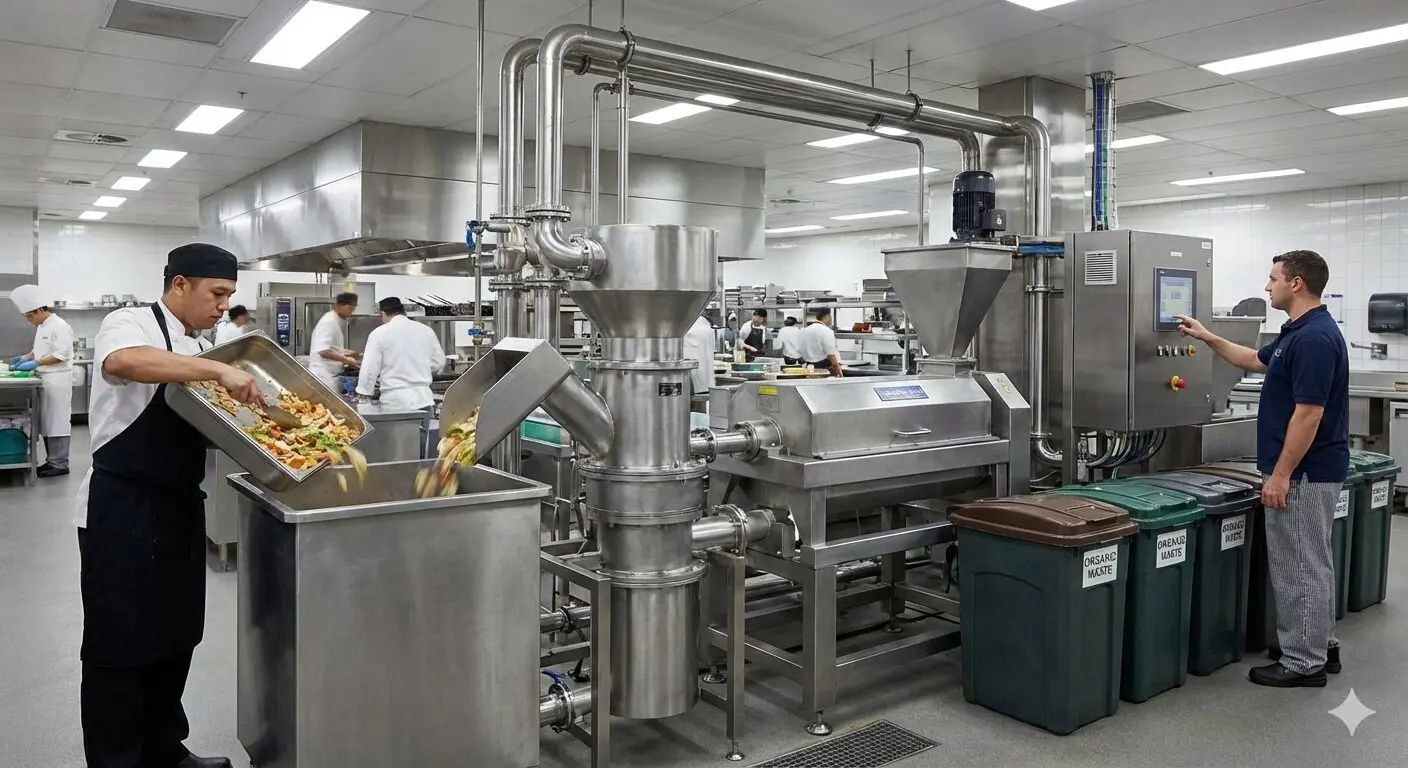
Benefits of Food Waste Management for Hotels
-
Lower food purchase and disposal costs per cover.
-
Reduced landfill waste and methane emissions.
-
Stronger ecofriendly brand image and guest trust.
-
Better compliance with waste disposal regulations.
-
Improved kitchen efficiency and portion control.
Key Challenges in Hotel Food Waste Management
-
Hotels manage complex operations, so food waste control is often uneven between buffets, banquets, and à la carte outlets.
-
Unpredictable guest demand makes it hard to balance variety, overproduction, and spoilage.
-
Limited kitchen space, poor segregation, and lack of staff training can block the success of any hotel food waste management system.
Technologies & Innovations: Industrial Food Waste Treatment Technologies for Hotels
Industrial Food Waste Treatment Technologies for Hotels
|
Type |
How It Works |
Best For |
|
Industrial food waste composter for hotels |
Uses aerobic digestion to convert segregated food waste into compost for gardens or landscaping. |
Resorts, hotels with green areas and hotel organic waste management system goals. |
|
Anaerobic digester / hotel biogas plant from food waste |
Decomposes organic waste in the absence of oxygen, producing biogas and nutrient rich digestate. |
Large hotels want a hotel food waste to the energy system and lower energy bills. |
|
Onsite hotel food waste treatment system (dehydrators / converters) |
Dehydrates and converts food waste to dry, inert output, reducing weight and volume. |
City hotels with high waste and limited space for an industrial food waste disposal system for hotels. |
|
Food waste tracking software and winnow solutions |
Tracks waste by station, time, and menu using scales and smart meters such as the Winnow system. |
Hotels focusing on prevention, accurate data, and smart food waste management system decisions. |
|
Offsite industrial food waste management companies |
External food waste management companies collect segregated hotel waste for central treatment. |
Chains that prefer outsourcing an industrial food waste treatment system for hotels. |
Why Food Waste Management Matters for Hotels Today
-
Food waste is now one of the most visible sustainability issues in hospitality, and guests actively notice how hotels handle leftovers and buffets.
-
Poor management raises landfill volumes, methane emissions, and waste tax or hauling charges, directly hurting profitability.
-
A sustainable food waste system for hotels supports corporate social responsibility, ESG goals, and competitive positioning in ecoconscious markets.
Common Sources of Food Waste in Hotel Operations
-
Overstocked inventory and poor demand forecasting at the purchasing stage.
-
Preparation waste from trimming, peeling, and cooking errors in the hotel kitchen food waste management system.
-
Buffet overproduction, especially when displays must look full.
-
Plate waste from oversized portions and unpredictable guest appetite.
-
Spoilage due to incorrect storage, cold chain breaks, or menu changes.
Pros and cons of Industrial Food Waste System for Hotels
|
Aspect |
Pros |
Cons |
|
Costs |
Cuts long term disposal and food purchasing costs; supports hotel food waste management system ROI. |
Requires upfront capex, planning, and possible retrofitting. |
|
Sustainability |
Reduces landfill use, methane, and supports a hotel organic waste management system. |
Needs ongoing segregation, discipline and monitoring. |
|
Operations |
Makes waste handling more efficient and data driven with food waste tech and tracking. |
Demands staff training, space allocation, and maintenance. |
Step by Step Implementation Plan for Hotels
-
Conduct a baseline audit of all food waste streams across kitchens, buffets, restaurants, and banquets using simple weighing or food waste tracking software.
-
Map volumes, peaks, and types of waste to decide whether you need an onsite hotel food waste treatment system, a hotel industrial food waste system, or outsourced collection.
-
Define goals such as percentage waste reduction, landfill diversion, or energy generation via a hotel biogas plant from food waste.
-
Improve segregation at source with colorcoded bins, clear labels, and simple instructions for all food handling staff.
-
Shortlist vendors for an industrial food waste system for hotels, including industrial food waste composter for hotels, dehydrators, digesters, and In Vessel Composting for Advanced Organic Waste Management.
-
Run a pilot in one kitchen, track performance with food waste tech such as the Winnow company or similar food waste management companies.
-
Train chefs, stewards, and service teams on portion control, menu engineering, and use of the hotel kitchen food waste management system.
-
Integrate monitoring into daily checklists and monthly management reviews using data from your food waste tracking software.
-
Scale successful practices across all outlets and refine your industrial food waste disposal system for hotels based on results.
-
Communicate your sustainable food waste system for hotels in marketing and ESG reports to build guest trust and partner recognition.
How to Choose the Right Industrial Food Waste System for Your Hotel
-
Start with your volume profile, kitchen layout, and local regulations before selecting any industrial food waste management system for hotels.
-
Highvolume resorts with landscaping may prefer an industrial food waste composter for hotels, while urban business hotels might choose a compact onsite hotel food waste treatment system with dehydrators.
-
If you want energy generation, combine a hotel biogas plant from food waste with a hotel food waste to energy system that feeds back into hot water, laundry, or kitchen power.
Key selection criteria include:
-
Daily food waste quantity and seasonal peaks across all outlets.
-
Space, utilities, and ventilation available for an industrial food waste treatment system for hotels.
-
Ability to integrate with your existing hotel food waste management system and broader hotel organic waste management system.
-
Local partnerships and service support from food waste management companies experienced in hospitality.
You should also evaluate digital tools like winnow solutions and other food waste tracking software to strengthen prevention before treatment.
Smart meters such as the Winnow system can highlight menu items that drive the most waste, helping chefs adjust production and reduce overcatering.
This combination of hardware, software, and service partners gives you a full commercial food waste management system for hotels rather than a standalone machine.
Conclusion: Why Industrial Food Waste Systems Are Now Essential for Hotels
An industrial food waste system for hotels is no longer a niche addon; it’s now essential for profitable and responsible operations. Rising disposal costs, tighter regulations, and guest demand for ecoconscious stays make it a must have. A structured hotel food waste management system combined with prevention focused tools like Winnow solutions helps minimize waste at the source. Partnering with reliable food waste management companies and implementing Decentralized Waste Management Systems ensures proper recycling and disposal, enabling hotels to shift from linear disposal to a circular food waste recycling system.
Learn more about sustainable hotel food waste solutions at Pious Earth
FAQ’s
-
What is the main purpose of an industrial food waste system for hotels?
It reduces food waste volume, treatment costs, and environmental impact while supporting recycling or energy recovery. -
Can small hotels benefit from a hotel industrial food waste system?
Yes, even small properties can use compact composters, dehydrators, or outsourced food waste management companies. -
Is a hotel biogas plant from food waste difficult to run?
It needs expert design, regular feeding, and basic maintenance, usually supported by specialized vendors. -
How does food waste tracking software help hotels?
It shows where and why waste occurs, so chefs can adjust menus, portions, and purchasing to prevent losses. -
What is the quickest win in hotel kitchen food waste management system improvement?
Improve segregation, track daily waste, and optimize buffets and portions before investing in new hardware.
