Introduction to Landfills in Waste Management
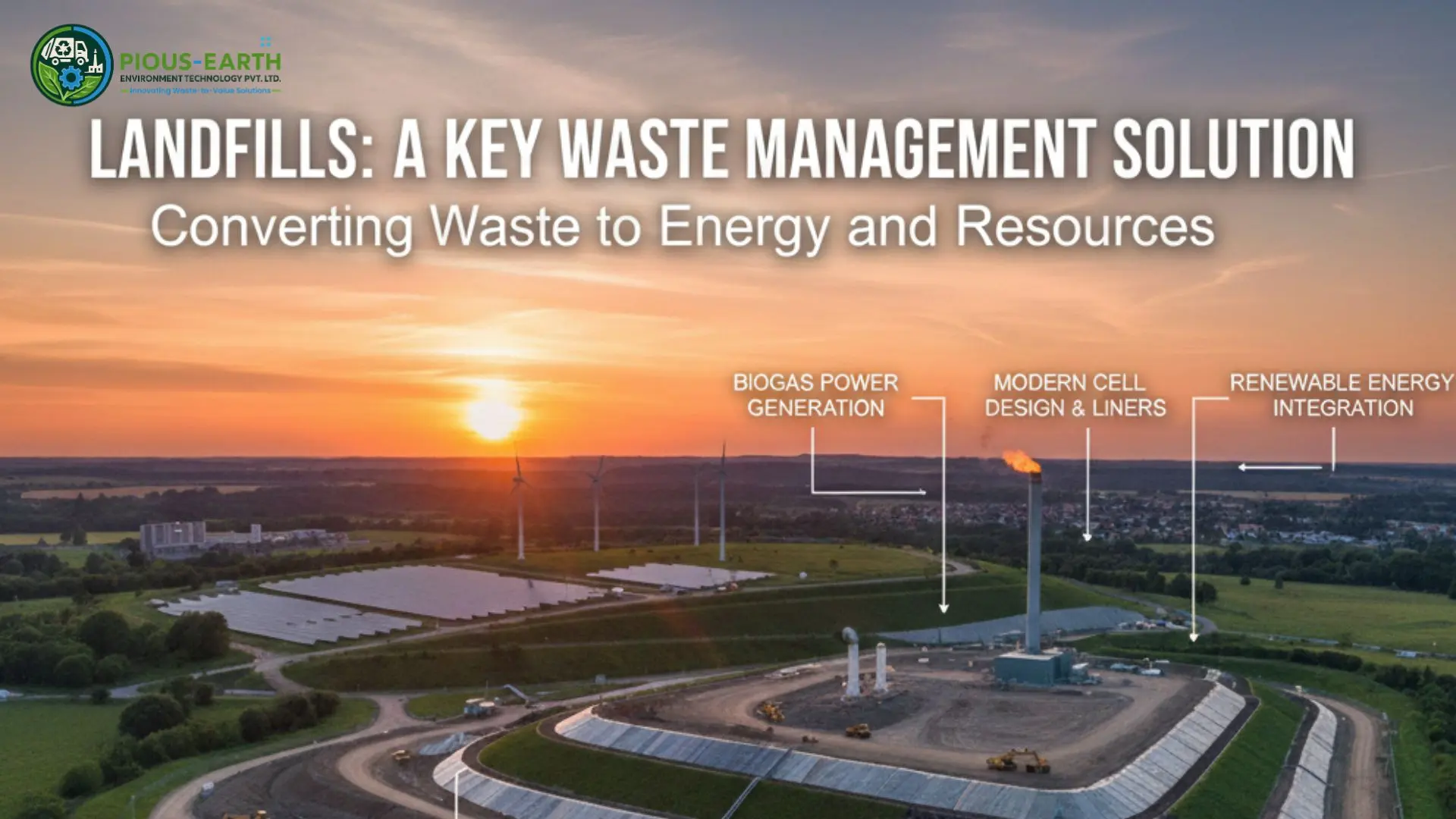
Landfills play a crucial role in modern waste management systems by providing a controlled and safe method for disposing of solid waste. In landfills in waste management, waste materials are placed in engineered landfill sites designed with liners, leachate collection systems, and methane gas capture technology to reduce environmental impact.
Why Are Landfills Important in Waste Management?
The importance of landfill in waste management lies in its ability to handle large volumes of non-recyclable waste while preventing pollution of soil and groundwater. Modern sanitary landfills also support landfill gas energy recovery, helping convert waste emissions into usable energy and making landfill waste disposal more sustainable.
• Landfills contain waste materials in a secure manner which protects the environment from pollution.
• The system uses compact waste management methods to achieve maximum space efficiency through multiple waste disposal operations.
• Leachate collection systems serve to protect both soil and groundwater from potential contamination.
• The process enables the capture of methane emissions from waste materials which can then be transformed into sustainable energy sources.
• Organic waste materials undergo a process of stabilization or resource recovery through their processing.
• The implementation of automated monitoring systems together with advanced machinery results in enhanced operational performance and worker protection.
Types of Landfills Used in Waste Management
-
Municipal Solid Waste (MSW) Landfills: Handle everyday trash like household garbage and landfill waste examples such as food scraps, plastics, and paper.
-
Sanitary Landfill: Engineered sites with liners to prevent leaks, defining the true landfill meaning in waste management for controlled disposal.
-
Hazardous Waste Landfills: Specialized for toxic materials, ensuring safety beyond regular landfills is used for.
-
Construction and Demolition (C&D) Landfills: Manage debris like concrete and wood, supporting integrated waste streams.
Process of Landfills in Waste Management
Modern landfills follow a precise landfill process to minimize harm. Here's a quick look at their operation in a table.
Step 1: Waste Delivery
Trucks unload sorted waste at the site for inspection.
Step 2: Spreading & Compacting
Waste spreads in thin layers, then compacts with heavy machinery to save space.
Step 3: Daily Cover
Soil or tarps cover waste daily to control odors and pests.
Step 4: Liner & Leachate System
Impermeable liners catch liquids; leachate collects for treatment.
Step 5: Gas Collection
Captures landfill gas for energy recovery, highlighting landfill gas energy recovery benefits.
Step 6: Final Capping
Post-closure, a cap seals the site with vegetation for long-term stability.
This process shows the role of landfills in modern waste management.
Environmental Protection Measures in Modern Landfills
Modern sites use tech to cut harm. Are landfills good for the environment? Yes, with these steps.
-
Liners and caps block toxins from soil and water. Groundwater monitoring ensures early detection.
-
Gas capture systems turn methane into power, reducing emissions.
-
Leachate treatment plants clean runoff before release.
Landfills vs Other Waste Disposal Methods
Landfills shine in scale but pair with alternatives. See how they stack up.
|
Method |
Pros |
Cons |
Best For |
|
Landfills |
Cost-effective landfill waste disposal; handles bulk waste. Pros of municipal solid waste landfills include reliability. |
Space limits; methane output. |
Non-recyclables like diapers. |
|
Incineration |
Volume reduction; energy from burning. |
High costs; air pollution. |
Cities are short on land. |
|
Composting |
Turns organics into soil; eco-friendly. |
Limited to biodegradables. |
Food waste. |
|
Recycling |
Saves resources; cuts landfill use. |
Sorting needed; contamination issues. |
Plastics, metals. |
|
In vessel composting system |
Fast, odor-free organic breakdown. |
Equipment costs. |
Commercial Food Waste Composting. |
Landfills fit best in the waste hierarchy as a final step. Why are landfills essential for waste hierarchy? They manage what others can't.
How Landfills Support Sustainable Waste Management
Landfills aid long-term goals when managed right. Benefits of landfills in waste management emerge here.
-
Enable landfill gas energy recovery benefits, powering homes with captured methane.
-
Promote waste to energy, lowering fossil fuel use.
-
Support landfills in integrated waste management by handling residuals from recycling and composting.
-
Encourage sustainable landfill management practices like monitoring and reclamation.
How landfills help manage solid waste? They provide stability while alternatives scale up.
Challenges of Landfills and How They Are Managed
Landfills face hurdles, but solutions exist. Check this table on key issues.
|
Challenge |
Impact |
Management Strategy |
|
Methane Emissions |
Greenhouse gas contributor. |
Gas to energy plants; flaring systems. |
|
Leachate Pollution |
Water contamination risk. |
Advanced liners and treatment tech. |
|
Space Shortages |
Land competition. |
Compaction and site extension policies. |
|
Odor & Pests |
Community complaints. |
Daily covers and fencing. |
|
Post-Closure Care |
Long-term costs. |
Funded trusts per EPA rules. |
These fixes boost the advantages of landfills for waste disposal.
Drawing from policy shifts, like those reshaping disposal economics, stricter rules push better designs. The true cost of waste rises with fines, favoring sanitary landfill upgrades.
Future of Landfills in Sustainable Waste Management
Tomorrow's landfills evolve smartly. Here's what's ahead.
-
Bioreactor landfills speed decomposition for faster stabilization.
-
AI monitoring for real-time gas and leachate control.
-
Integration with Waste Management Solutions like Decentralized Waste Management Systems.
-
Zero-waste push via Pious efforts in recycling first.
The importance of landfill in waste management endures, but smarter.
Conclusion
Landfills useful in waste management offer essential benefits despite challenges. With innovations, they align with green goals. Pair them with composting and recycling for best results.
Frequently Asked Questions
Q: What is a landfill?
A designated site for disposing non-hazardous solid waste safely.
Q: Landfill meaning in waste management?
Engineered disposal area preventing environmental harm during waste burial.
Q: Are landfills good for the environment
Yes, modern ones with gas capture and liners reduce impacts significantly.
Q: Advantages of landfill?
Cost effective, scalable, and enables energy recovery from waste.
Q: How are landfills useful in waste management?
They securely manage residuals, supporting the waste hierarchy effectively.
