What is a PLC Controlled Food Waste Converter?
-
A food waste converter powered by a Programmable Logic Controller (PLC) automates the decomposition of organic waste.
-
It processes food scraps into compost or fertilizer via controlled aeration and temperature.
-
Ideal for decentralized waste management systems, unlike traditional composting, making it a powerful solution for smart waste management in urban environments.
PLC-controlled food waste converters streamline waste handling in urban settings. They integrate plc controlled systems for precision.
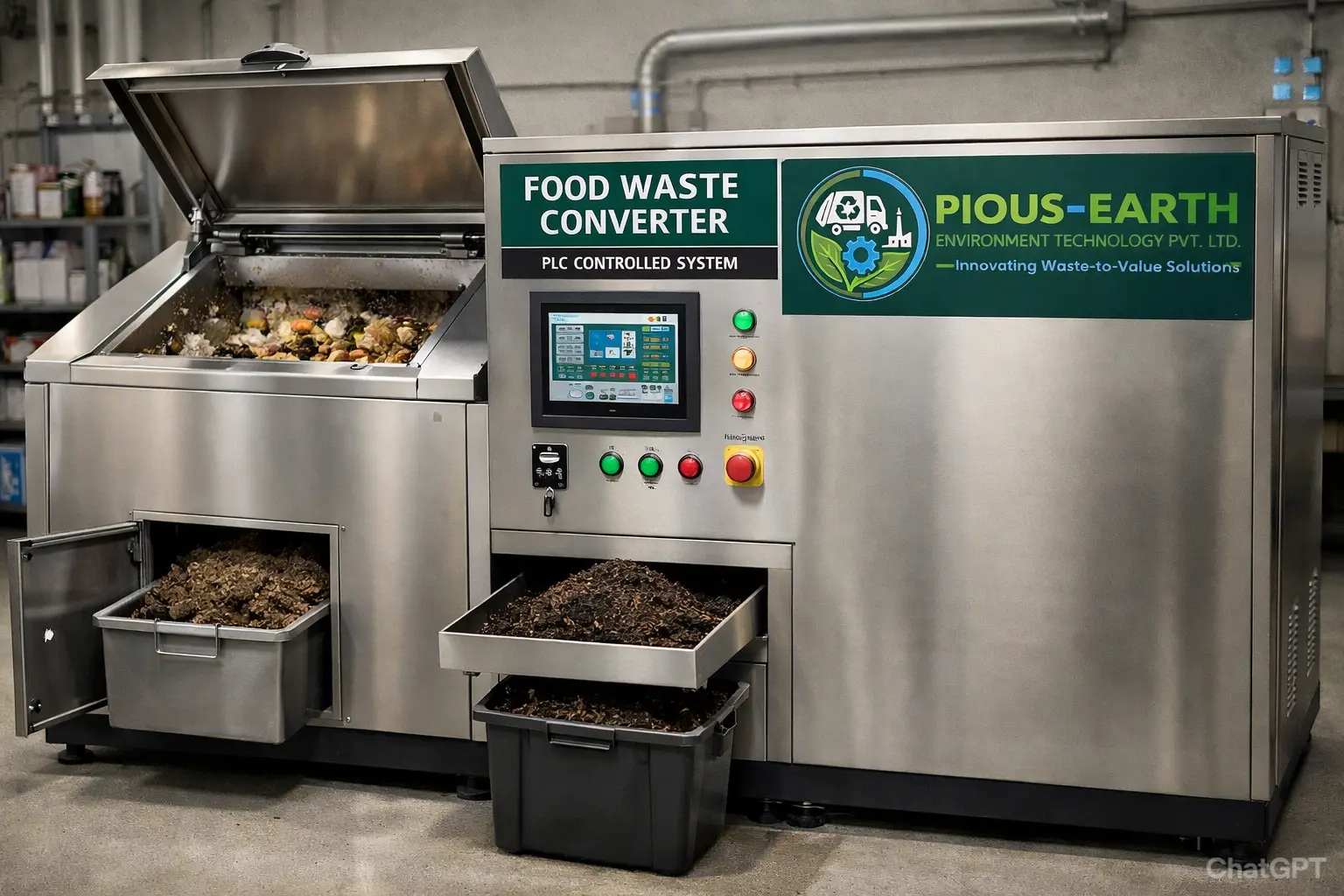
Key Components
-
PLC Controller: Acts as the central brain, managing all system operations.
-
Shredder and Conveyor: Includes plc conveyor control and food waste conveyor for efficient feeding.
-
Aeration and Heating System: Ensures optimal conditions for microbial breakdown.
-
HMI Interface: PLC based waste converter with HMI interface for user monitoring.
-
Insulated Vessel: Supports in vessel composting system for odor-free processing.
-
Sensors: Monitor moisture, temperature, and gas levels in real-time.
These plc controlled equipment components make the food waste converter machine reliable. Pious engineering ensures durability.
Environmental Consequences of Food Waste
-
Food waste contributes to 8-10% of global greenhouse gas emissions, mainly methane from landfills.
-
It wastes resources like water and energy used in production, exacerbating scarcity.
-
Decomposing waste pollutes soil and water, harming ecosystems worldwide.
- This makes the adoption of sustainable waste technology more critical than ever.
How PLC Controlled Food Waste Converters Work
-
Waste Loading: Users load food scraps into the inlet via plc controlled conveyor systems.
-
Shredding: Built-in shredder breaks down waste, similar to plc controlled machinery prep.
-
Decomposition: PLC automates aeration, heating to 60°C, speeding organic waste converter process.
-
Monitoring: Sensors feed data to PLC, adjusting parameters like in plc controlled retort machines.
-
Output: Yields compost in 10-15 days, ready as fertilizer.
This plc converter mimics natural decay but faster. It powers plc controlled solid waste management systems effectively.
Benefits of PLC Controlled Food Waste Converters
|
Benefit |
Description |
Impact |
|
Volume Reduction |
Shrinks waste by 80-90% quickly. |
Saves landfill space. |
|
Odor Control |
The sealed vessel composting system prevents smells. |
Ideal for urban use. |
|
Automation |
PLC control ensures hands-free operation. |
Reduces labor costs. |
|
Compost Quality |
Produces nutrient-rich fertilizer via food waste to fertilizer machines. |
Enhances soil health. |
|
Energy Efficiency |
Low power use in energy-efficient PLC waste converter technology. |
Eco-friendly. |
|
Compliance |
Meets green building certification waste management standards. |
Supports certifications. |
Industrial food waste management systems benefit immensely (one-time). These waste management solutions cut costs long-term.
Applications Across Industries
These systems play a crucial role in smart waste management across multiple sectors.
-
Housing Societies: Composting machine for housing societies handles daily scraps efficiently.
-
Hospitals: Hospital waste composting equipment processes bio-waste safely.
-
Factories: Canteen waste management for factories via PLC controlled bio-waste conversion unit.
-
Hotels and Restaurants: PLC based kitchen waste converter machine for high volumes.
-
Municipalities: Efficient PLC municipal waste converter for communities.
-
Homes: Organic waste converter for home or food waste compost machine for home units available.
PLC operated waste to fertilizer machines that fit decentralized waste management systems. Franchise opportunities exist with waste converter manufacturers.
Challenges and Solutions for PLC Controlled Food Waste Converter
-
High Initial Cost: Organic waste converter machine price concerns buyers; solution: seek government subsidies.
-
Maintenance Needs: PLC ladder logic waste converter system requires tech support; train staff via manuals.
-
Waste Variability: Mixed inputs slow process; educate on organic waste converter process.
-
Space Constraints: Wet waste composting machine for home needs room; opt for modular PLC waste conversion technology.
-
Power Dependency: Outages disrupt; install backups for industrial-grade PLC waste conversion equipment.
PLC controlled organic waste converter overcomes hurdles with smart design. A wet waste composting machine for society thrives similarly.
Future of PLC Controlled Waste Conversion
As sustainable waste technology evolves, PLC-controlled systems are becoming more advanced and efficient.
|
Trend |
Description |
Expected Outcome |
|
AI Integration |
PLC automated waste to energy converter with predictive analytics. |
Smarter efficiency. |
|
Scalability |
Automatic PLC waste segregator and converter for larger plants. |
Broader adoption. |
|
IoT Connectivity |
PLC integrated waste decomposition unit links to apps. |
Remote monitoring. |
|
Sustainability Focus |
PLC controlled systems reduce emissions further. |
Net-zero goals. |
|
Cost Reductions |
Mass production lowers prices for wet waste composting machines for society. |
Affordable access. |
E waste management using plc inspires similar innovations. PLC based waste water treatment system parallels growth.
Case Study: 90% Wet Waste Reduction in a Residential Society
A 600-resident housing society generating nearly 500 kg of food waste per day installed a 500 kg/day PLC controlled food waste converter to manage waste on-site.
The Challenge
The society faced high waste transportation costs (₹70,000+ per month), odor complaints, and dependence on municipal landfill disposal.
The Solution
A fully automated PLC-based organic waste converter was installed with:
- Built-in shredder
- Automatic aeration and heating (up to 60°C)
- In-vessel composting system
- HMI monitoring interface
The system required minimal manual intervention and was installed within 250 sq. ft. space.
The Results (After 6 Months)
-
85–90% waste volume reduction
-
Monthly savings of ₹60,000+
-
Compost production for landscaping use
-
Zero odor complaints
-
ROI achieved within 12–14 months
This case highlights how a PLC controlled food waste converter enables efficient, odor-free, and cost-effective decentralized waste management for residential communities.
Final Thoughts
PLC-Controlled Food Waste Converter revolutionizes waste handling for a greener planet. Adopt these plc controlled machines today for sustainable living. Explore franchise opportunities now.
Frequently Asked Questions
Q: What is the price of an organic waste converter machine price?
Ranges from ₹2-10 lakhs based on capacity.
Q: Is there a food waste compost machine for home?
Yes, compact models suit households.
Q: How does an organic waste converter process work?
Shreds, aerates, and composts in 10-24 days.
Q: What about wet waste composting machines for society?
Perfect for 500+ residents, automated.
Q: Who are top waste converter manufacturers?
Leading firms offer PLC controlled equipment.
