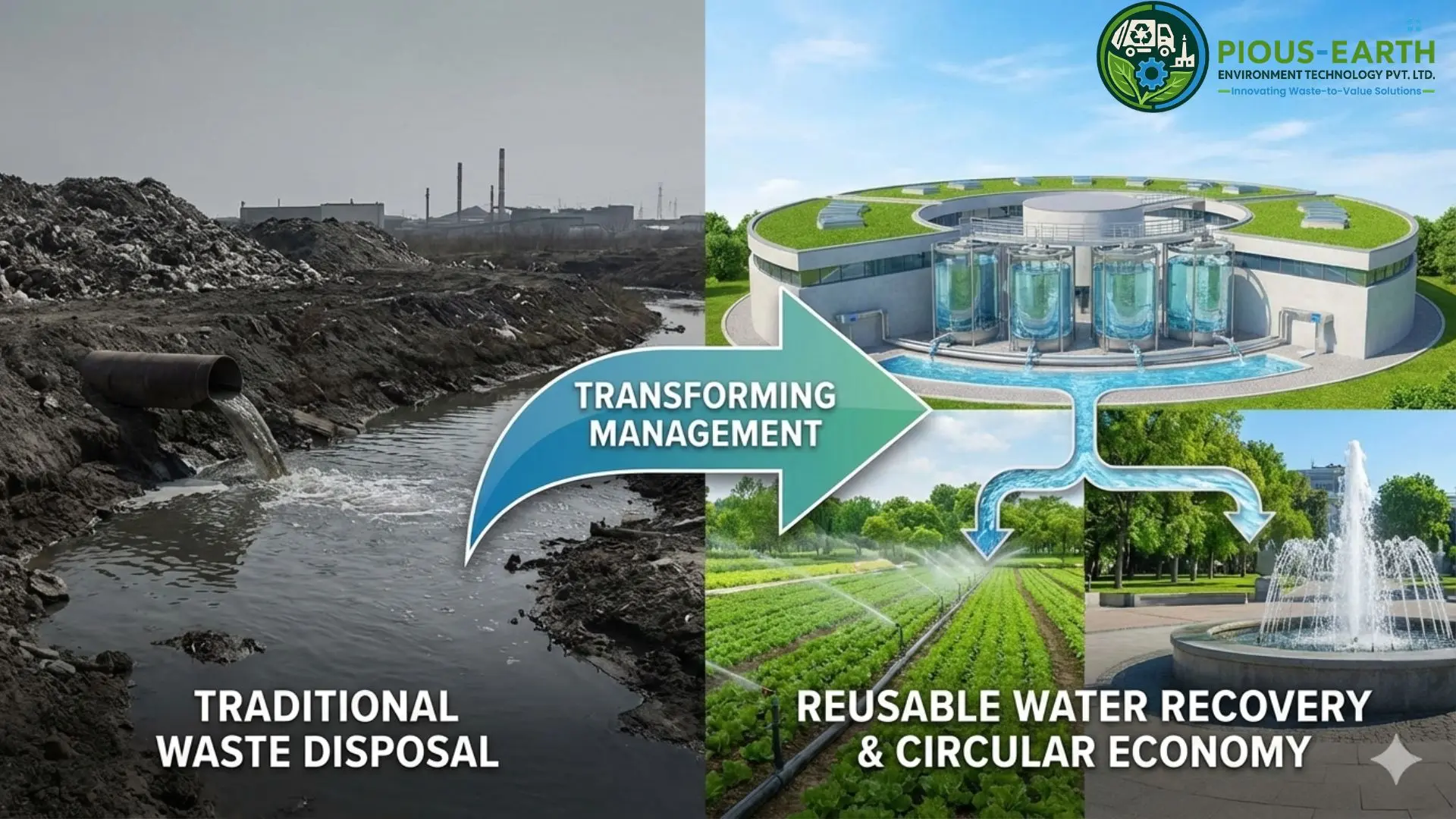
What Is Reusable Water Recovery?
Reusable water recovery is the process of treating wastewater so it can be safely reused for irrigation, industry, flushing or as an input in new products like liquid fertilizer from food waste.
Problem of Food Waste and Water Scarcity
-
Around one-third of all food produced for people is lost or wasted each year, which creates waste of land resources and energy consumption and embedded water resources.
-
Agriculture already consumes approximately 70 percent of the world's freshwater resources, thus every kilogram of discarded food results in the loss of substantial irrigation water.
-
Landfills generate food waste which produces leachate that causes groundwater and surface water pollution, leading to increased water shortage problems in the area.
-
Food system emissions create climate change which disrupts rainfall patterns and raises drought risks for multiple regions.
-
To bring about effective solutions, policy changes and landfill bans are encouraging business communities to adopt sustainable waste management systems and recyclable water systems.
Global Food Waste Statistics and Environmental Impact
-
The world produces 1.3 billion tonnes of edible food which becomes waste every year, creating a major environmental challenge.
-
Food waste has become a significant greenhouse gas emission problem that ranks as the third largest source of emissions after China and the United States.
-
The blue water footprint of food wastage is roughly 250 cubic kilometres per year, comparable to the annual discharge of major rivers.
-
Wasted food occupies almost 1.4 billion hectares of land, close to 30 percent of the world’s agricultural area.
-
More than 40 percent of food in some high‑income regions is wasted at retail and consumer level, amplifying emissions and water loss.
The Hidden Water Footprint of Food Waste
-
The water used to grow food that is never eaten is estimated to be three times the volume of Lake Geneva each year.
-
In 2023, surplus food in the United States alone embodied about 16.2 trillion gallons of water, more than all freshwater used in some large states combined.
-
High‑impact products like beef can require around 25,000 litres of water per kilogram, which is wasted if that meat is discarded.
-
Food-processing wastewater carries organic loads, nutrients and chemicals that are costly to treat but also rich in recoverable resources.
-
Reusable water recovery technology captures this hidden water footprint and returns it to productive use instead of letting it become pollution.
Importance of Sustainable Waste Management in 2026
-
Tightening policies, landfill bans and emissions trading schemes are rapidly increasing the true cost of waste disposal.
-
Governments are promoting circular economy waste management and zero waste food processing technology to cut emissions and water use.
-
The food and beverage wastewater recovery system market is forecast to more than double by 2034, showing how quickly adoption is growing.
-
Cities and industries face higher fees for freshwater withdrawals and wastewater discharge, making reusable water recovery systems financially attractive.
-
Investors, regulators and Green Building Certification Waste Management standards are pressuring organisations to prove reusability of water and low-impact Waste Management Solutions.
How Reusable Water Recovery Systems Work
|
Step / Component |
What Happens |
Waste to resource angle |
|
1. Collection of food waste streams |
Food scraps can be put in the drain line or collected from kitchens, canteens and Industrial Food Waste Management Systems. |
Captures food scraps of tomato, vegetable trimmings and scrap food then lees before they hit landfill. |
|
2. Pre‑treatment and screening |
Solids like peels and bones are screened, ground or separated, often in an In vessel composting system or decentralised pre‑processing. |
Pre‑treated organics can feed Commercial Food Waste Composting or food scraps to liquid compost processes. |
|
3. Biological treatment |
Microorganisms break down dissolved organic matter in tanks, reactors or co‑digestion facilities at water resource recovery plants. |
Wastewater recovery from food waste reduces organic pollution and produces biogas or liquid organic fertilizer from food waste. |
|
4. Advanced filtration and membranes |
Technologies like ultrafiltration, reverse osmosis or advanced adsorptive media remove remaining contaminants. |
Produces reusable waste water suitable for cooling, cleaning or irrigation through eco-friendly wastewater recycling methods. |
|
5. Disinfection and polishing |
UV, ozone or chlorination meet health standards, and water quality is monitored for different reuse options. |
Enables reusable water recycling, reusable water reclamation and safe food waste water recycling system for industries. |
|
6. Storage and reuse |
Treated water is stored in tanks and piped back into industrial food waste water reuse system loops or irrigation networks. |
Closes the loop so reusable waste is turned into a resource, supporting circular economy waste management. |
Environmental Benefits of Reusable Water Recovery
|
Benefit |
How it helps in 2026 |
|
Cuts freshwater withdrawals |
Reduces pressure on rivers, aquifers and reservoirs by supplying process water from recovered sources. |
|
Lowers greenhouse gas emissions |
Avoids emissions from pumping, treating and transporting additional freshwater and reduces landfill methane. |
|
Prevents water pollution |
Captures nutrients and organics before they become leachate or untreated effluent entering waterways. |
|
Supports zero waste food processing technology |
Links waste to resource technology with organic waste water recycling to keep materials in circulation. |
|
Enhances resilience to drought |
Provides a stable non‑potable supply, vital for agriculture and industry in water‑stressed regions. |
Economic Benefits for Cities and Businesses
-
Reusable water recovery systems can significantly cut industrial water bills and wastewater discharge fees for food processors and factories.
-
On‑site and Decentralized Waste Management Systems reduce transport, landfill gate fees and exposure to rising carbon or landfill taxes.
-
Converting food waste to liquid fertilizer and organic waste to liquid nutrient solution creates new revenue streams and franchise opportunities for waste to resource technology providers.
-
Commercial food waste water recovery machine solutions lower operating risks for Canteen Waste Management for Factories and hospitality businesses that must comply with stricter trade effluent standards.
-
Aligning with sustainable waste management solutions improves brand reputation, supports Pious environmental goals and helps buildings qualify for Green Building Certification Waste Management credits.
Technologies Used in Water Recovery Systems
|
Technology |
Role in reusable water recovery process |
|
Anaerobic digestion and co‑digestion |
Treats organic-rich food waste and wastewater together, producing energy and high‑quality effluent for reuse. |
|
Membrane bioreactors (MBR) |
Combine biological treatment with membrane filtration to deliver high‑purity reclaimed water in a compact footprint. |
|
Advanced adsorptive media |
Uses low‑cost materials like spent coffee grounds and fly ash to remove nutrients and organics from industrial effluent. |
|
Nutrient recovery and liquid fertilizer systems |
Capture nitrogen, phosphorus and potassium, converting food waste to liquid fertilizer and liquid gold from food waste. |
|
Smart monitoring and control |
Sensors and automation optimize reusable water recovery technology performance and ensure compliance with reuse standards. |
Case Studies of Water Recovery Systems
-
Water resource recovery facilities co‑digesting food wastes and wastewater now supply reclaimed water for irrigation and industrial use.
-
Food and beverage plants are investing in industrial food waste water reuse system setups to cut fresh water demand by up to one‑third.
-
Pilot projects show that converting food scraps into liquid fertilizer and liquid gold from food scraps can replace synthetic fertilisers on nearby farms.
-
Some beverage and dairy facilities follow guidelines from bodies like the FAO and Agriculture & Food Systems Institute to design safe water recovery schemes.
-
Municipal utilities are partnering with Commercial Food Waste Composting providers to integrate organic waste to liquid nutrient solution production with water reclamation.
Challenges and Limitations of Water Recovery Systems
|
Challenge |
Why it matters |
What can help |
|
High upfront investment |
Advanced treatment, tanks and piping require significant capital, especially for smaller sites. |
Green finance, grants and performance‑based contracts can spread costs. |
|
Variable food wastewater quality |
Different products, seasons and processes change pollutant loads and treatment needs. |
Robust design, buffering and flexible control strategies manage fluctuations. |
|
Regulatory and safety concerns |
Strict rules govern how reusable water reclamation can be used, especially near food production. |
Clear guidelines, risk assessments and monitoring build trust and compliance. |
|
Operational expertise |
Plants need skilled teams to operate reusable water recovery system assets reliably. |
Training, remote support and standard operating procedures reduce failures. |
|
Public perception |
People may resist reusability of water, especially for uses close to households. |
Transparent communication and demonstration projects build acceptance. |
Future Trends in Wastewater Reuse
-
Waste to resource technology is evolving toward integrated hubs that recover water, energy and nutrients from a single food waste stream.
-
Emerging systems turn food waste water recovery into a platform for producing bio-based chemicals, fertilisers and clean process water in one loop.
-
Industrial Food Waste Management Systems are being designed with embedded food waste water recycling systems for industries from day one.
-
New guidelines and standards will accelerate reusable water recycling in sectors like beverages, dairy and packaged foods.
-
As more cities pursue circular economy waste management, reusable water recovery technology will be central to urban resilience strategies.
How Businesses Can Adopt Reusable Water Recovery
-
Start with a detailed audit of food waste streams, organic waste water recycling needs and current discharge costs across your sites.
-
Prioritise high‑volume kitchens, factories and canteens where food waste water recovery offers quick payback and strong benefits of water recovery from food waste.
-
Combine on‑site treatment, an In vessel composting system and decentralised water reuse loops to reduce reliance on distant facilities.
-
Engage technology partners offering commercial food waste water recovery machine solutions, as well as Composting Machine for Housing Societies, Hospital Waste Composting Equipment and Canteen Waste Management for Factories where relevant.
-
Explore Franchise Opportunities with providers of reusable waste management, waste to resource technology and food waste recycling technology that already meet leading standards.
-
Integrate reusable water recovery process planning into new builds and refurbishments to align with Green Building Certification Waste Management criteria.
Conclusion: Turning Waste into a Valuable Water Resource
Reusable water recovery proves that reusable waste is not a burden but a powerful resource when we link food waste to liquid fertilizer, reclaimed water and circular economy waste management. By investing in reusable water recovery system infrastructure, businesses, cities and industries can cut costs, secure water supplies and show that food waste to resource recovery is essential to sustainable waste management in 2026 and beyond.
Frequently Asked Questions
Q1. How Does Food Waste Affect the Environment?
A1. It wastes land, energy and water while generating greenhouse gases and potential water pollution.
Q2. What is reusable water recovery in food processing?
A2. It is the treatment of food industry wastewater so it can safely replace some freshwater in operations or irrigation.
Q3. Can food waste to liquid fertilizer really replace chemical fertiliser?
A3. Properly treated liquid gold from food waste can substitute part of synthetic fertiliser needs, especially in nearby farms.
Q4. Is reusable water recovery suitable for small sites like housing societies?
A4. Yes, compact systems and Composting Machine for Housing Societies can pair with local reuse loops for gardening and flushing.
Q5. Which sectors benefit most from industrial food waste water reuse system projects?
A5. Food and beverage plants, canteens, hospitals and Commercial Food Waste Composting hubs see strong savings and compliance gains.
