Waste Management Challenges and Solutions
Waste management has become a major environmental challenge worldwide, especially in rapidly developing countries like India. With increasing urbanization, industrial growth, and rising consumption, cities are generating large volumes of solid waste every day. These growing waste management challenges and solutions are now a major concern for governments, industries, and communities.
In India particularly, the challenges of waste management in India are increasing due to population growth and limited infrastructure for waste processing. Poor waste segregation, limited recycling infrastructure, and overflowing landfills have created serious waste management issues and solutions that directly impact public health and the environment.
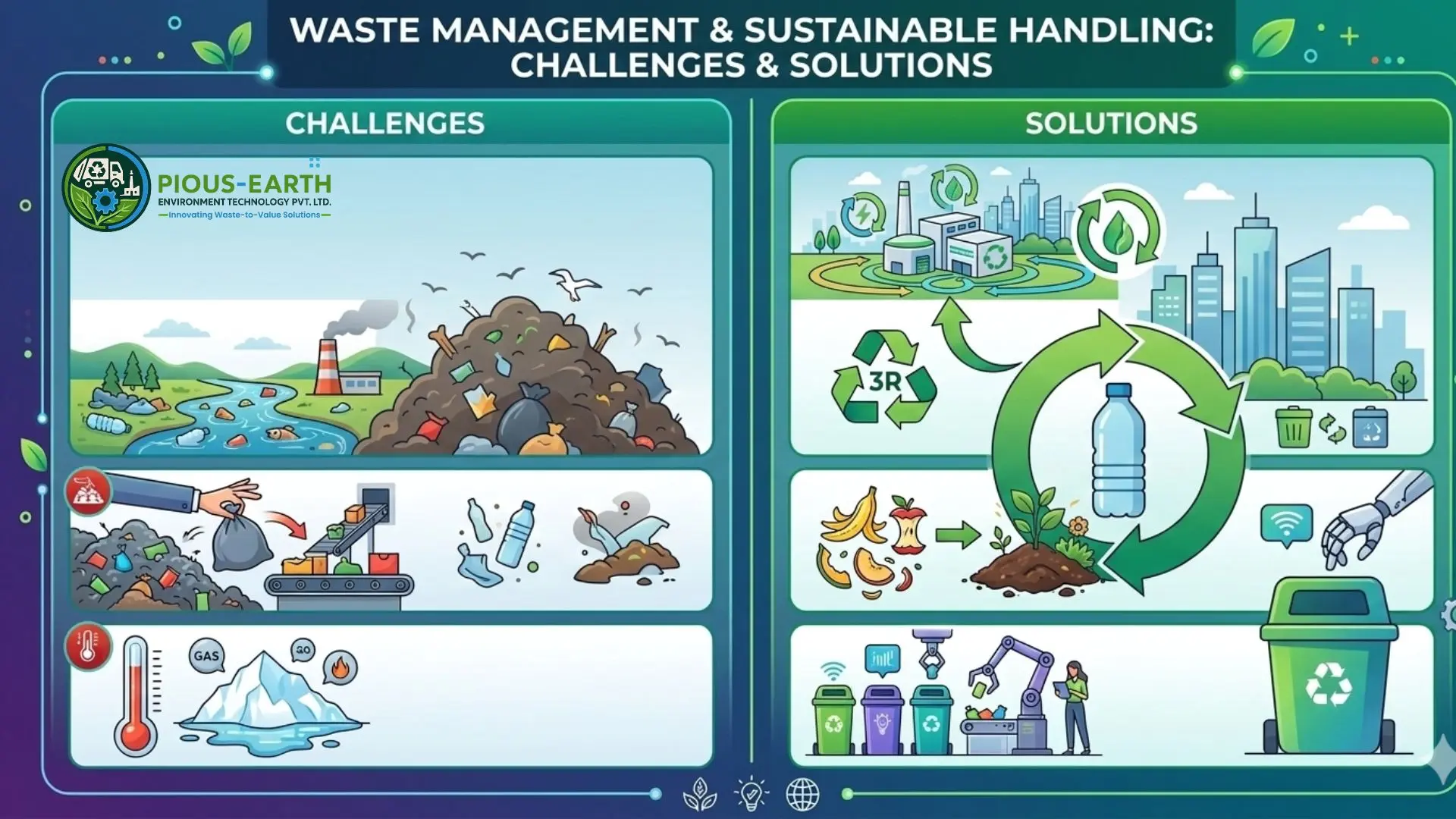
Effective Waste Management Solutions such as waste segregation at source, recycling systems, organic waste processing, and Decentralized Waste Management Systems are essential for reducing landfill waste and promoting sustainable cities. By adopting modern technologies, responsible waste disposal practices, and community participation, governments, industries, and households can work together to develop long-term solutions of waste management and sustainable urban systems.
Major Challenges in Waste Management
Across the world, governments and municipalities face multiple waste management problems and solutions that require urgent attention. In India particularly, the challenges in waste management in India are growing every year due to population growth and rising consumption patterns. These urban waste management challenges and solutions are also closely related to poor infrastructure and inefficient waste collection systems.
Some of the key challenges in solid waste management include:
- Increasing Waste Generation
Rapid urbanization has significantly increased the amount of waste produced in cities. This is considered one of the biggest problems of solid waste management and puts significant pressure on municipal systems.
- Lack of Waste Segregation
Many households and institutions do not separate waste at the source. This creates mixed waste streams and leads to major waste disposal challenges and solutions for authorities trying to manage municipal waste effectively.
- Limited Recycling Infrastructure
In many regions recycling facilities are inadequate. As a result, recyclable materials end up in landfills, increasing the problems of waste management and reducing resource recovery opportunities.
- Landfill Overflow
Landfills in many cities are reaching their capacity. This raises an important question often asked by researchers and policymakers: what is the biggest problem in waste management? In many urban areas, landfill overflow remains the most visible issue.
- Inefficient Waste Collection Systems
Poor collection infrastructure creates serious waste collection challenges and solutions that municipalities must address to improve efficiency.
These issues highlight key questions such as what are the problems of waste management, what are the challenges of waste management, and what are the problems and solutions of solid waste management in modern cities. Addressing these challenges is essential for developing effective municipal solid waste management challenges and solutions.
Environmental Impact of Poor Waste Management
Poor waste management practices can cause significant environmental damage. When waste is not properly treated or disposed of, it can pollute land, water, and air. Landfills release methane and other greenhouse gases that contribute to climate change. Improper waste disposal can also contaminate water bodies and harm ecosystems.
One major environmental concern researchers often discuss is the Food Waste Affect the Environment. When food waste decomposes in landfills, it releases methane, a greenhouse gas far more potent than carbon dioxide.
The environmental impacts of poor waste management include:
-
Soil pollution caused by toxic waste and landfill leachate
-
Water contamination due to improper waste disposal
-
Air pollution from burning waste and landfill gas emissions
-
Harm to wildlife and marine ecosystems from plastic waste
These impacts highlight why sustainable solutions for waste management in India and stronger environmental policies are necessary.
Practical Solutions to Waste Management Challenges
Addressing waste management challenges and sustainable solutions requires a combination of improved practices, better technology, and responsible behavior. By implementing effective problems and solutions to waste management, communities and organizations can significantly reduce environmental impact and improve resource efficiency.
Some practical solutions of waste management include:
- Waste Segregation at Source
Separating wet waste, dry waste, and hazardous waste at the point of generation makes waste processing more efficient and improves recycling rates. This is especially important in household waste management challenges and solutions.
- Improved Recycling Systems
Expanding recycling infrastructure helps solve major recycling challenges and solutions while reducing landfill waste.
- Organic Waste Processing
Food waste and biodegradable materials can be converted into compost using technologies like the In vessel composting system or advanced machines such as a PLC Controlled Food Waste Converter.
- Waste Reduction Practices
Encouraging responsible consumption, reducing packaging waste, and promoting reuse can significantly lower overall waste generation.
- Community Awareness Programs
Public education and awareness initiatives support community based waste management challenges and solutions and encourage responsible waste disposal practices.
These approaches help address problems and solutions of waste management, problems of solid waste management, and other environmental concerns.
Role of Technology and Industry in Waste Management
Technology plays a crucial role in solving solid waste management challenges and solutions across industries. Companies like Pious are developing advanced waste processing technologies to help institutions and businesses manage waste more efficiently.
Different sectors require specialized waste management systems such as:
-
Composting Machine for Housing Societies to manage residential organic waste
-
Hospital Waste Composting Equipment for safe healthcare waste handling and healthcare waste management challenges and solutions
-
Canteen Waste Management for Factories to process large volumes of food waste generated in industrial facilities
-
Industrial Food Waste Management Systems to treat organic waste generated by large institutions
-
Commercial Food Waste Composting solutions for restaurants, hotels, and hospitality businesses
These technologies support sustainable practices and compliance with environmental standards such as Green Building Certification Waste Management.
Additionally, many companies are expanding infrastructure through partnerships and Franchise Opportunities to improve waste processing capacity across cities.
Future of Waste Management
The future of waste management challenges and solutions will depend on adopting advanced technologies, improving policies, and encouraging responsible consumption. Governments, industries, and communities must work together to develop long-term sustainable waste management challenges and solutions.
Innovations in recycling technology, decentralized treatment, and smart waste collection systems will help address many problems and solutions of solid waste management while supporting cleaner and healthier cities.
Conclusion of Waste Management
In conclusion of waste management, the increasing volume of waste has created serious environmental concerns across the world. Addressing the challenges and solutions waste management systems must handle requires better infrastructure, improved recycling systems, and stronger public awareness. Issues such as improper segregation, landfill overflow, and limited recycling facilities contribute to the growing problems and solutions of waste management globally. By adopting sustainable technologies, encouraging community participation, and implementing effective solutions for waste management in India, societies can move toward cleaner cities and a more sustainable future.
